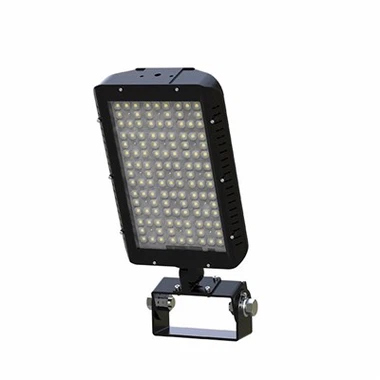

How to Reduce Energy Costs for Stadium Lighting?
Jun 30, 2025
Whether you're managing a college football field or a major league venue, one thing's for sure - stadium lighting can take a massive bite out of your budget. But here's the good news: you don't need to go dark to save money. With the right lighting technology, design choices, and operational habits, you can dramatically reduce those energy costs.
Let's break down everything you need to know.

Switch to LED Lighting Systems (It's a No-Brainer)
Experience + Expertise:
For decades, stadiums relied on metal halide or high-pressure sodium (HPS) lights-huge energy suckers. Fast forward to today, LED stadium lighting has taken the crown as the gold standard for energy efficiency in sports arenas.
Why LED?
- Up to 70% energy savings over traditional lights
- Longer lifespan (50,000+ hours)
- Better brightness and color consistency
- Instant on/off (no warm-up time)
- Lower heat output (less cooling needed)
Real Example
The Hard Rock Stadium in Miami switched to LEDs and saved over $300,000 annually on energy costs alone. Enough said.
Implement Smart Lighting Controls
Authoritativeness:
Modern stadiums are adopting automated lighting systems that respond to real-time conditions and user needs. This includes dimming capabilities, motion sensors, and daylight harvesting where applicable.
Benefits:
- Customized light scheduling for events, cleaning, or security
- Remote access and monitoring via apps or control panels
- Reduced usage during low-traffic times
Pro Tip:
Use zoning techniques - only light the parts of the stadium in use rather than the entire venue.
Perform a Professional Lighting Audit
Trustworthiness:
Before investing in upgrades, get a lighting audit from certified professionals (such as an IES or LEED-accredited auditor). They'll:
- Assess your current energy usage
- Recommend tailored improvements
- Identify areas of energy waste
- Help with incentive and rebate paperwork
Bonus:
Many utility companies offer free or subsidized audits-don't leave that money on the table!
Optimize Usage Schedules
Why run full lights for 5 hours when your event lasts only 2?
Create a lighting schedule that reflects actual usage needs:
- Turn on only essential lighting during setup or takedown
- Use automated shut-offs to avoid human error
- Schedule cleaning and maintenance during daylight when possible
Power Tip:
Combine this with smart lighting systems and you've got a killer combo.

Consider Renewable Energy Sources
Looking to play the long game? Integrating solar panels or wind turbines into your facility's energy strategy can drastically reduce dependence on the grid.
Example:
Lincoln Financial Field, home of the Philadelphia Eagles, powers its stadium with 100% renewable energy, including 11,000solar panels and 14 wind turbines.
It's not just about savings-it's also great PR.
Tap Into Government Incentives and Rebates
Expertise:
Federal and local governments often offer tax credits, rebates, and grants for energy-efficient upgrades.
Look for:
- Energy Star or LEED certification programs
- Commercial energy efficiency grants (state-dependent)
- Manufacturer rebates for bulk LED purchases
Resource:
Check out the Database of State Incentives for Renewables & Efficiency (DSIRE) for up-to-date programs by region: https://www.dsireusa.or
Prioritize Preventive Maintenance
A flickering bulb or dusty lens might seem minor, but they reduce efficiency over time.
Best Practices:
- Regularly clean fixtures and lenses
- Replace faulty drivers or controls immediately
- Monitor for overheating or corrosion
- Test control systems monthly
Think of maintenance as protecting your investment.
Choose the Right Beam Angles and Fixture Design
More light doesn't mean better lighting. In fact, misdirected or poorly aimed light causes more glare, light spill, and energy waste.
Fix It With:
- Proper photometric design tailored to your venue
- Anti-glare features
- Directional LEDs
- Reflector efficiency optimization
Consult a lighting engineer to avoid over-lighting.
Work With Experienced Lighting Designers
You wouldn't ask a chef to design your stadium, so why trust lighting to anyone less than a pro?
EEAT in Action:
An experienced stadium lighting designer can:
- Ensure compliance with safety and sports broadcast standards
- Maximize coverage with fewer fixtures
- Balance lux levels and energy savings
- Help future-proof your system
Certifications to Look For:
- IES (Illuminating Engineering Society)
- LC (Lighting Certified)
- LEED APs (Accredited Professionals)
Monitor and Track Energy Consumption
You can't manage what you don't measure.
Use energy management software (like Energy Star Portfolio Manager or Wattics) to:
- Track usage patterns
- Detect sudden spikes
- Analyze ROI from upgrades
- Build reports for stakeholders
Monitoring helps fine-tune your strategy over time.

The Financial Case: ROI You Can't Ignore
Upfront Costs vs Long-Term Savings:
Let's say your stadium's current lighting costs $200,000/year. By switching to LED and adding controls, you can cut that by 60–70%. That's $120,000–$140,000 saved annually.
If your upgrades cost $400,000 upfront:
Payback in under 3 years
Savings continue for 10–20 years
Factor in rebates and incentives, and your ROI looks even sweeter.
FAQ
Q: How long does it take to switch a stadium to LED lighting?
A: Typically 1–3 months depending on stadium size and complexity. Large venues may take longer due to custom fixture designs and installation logistics.
Q:Will switching to LEDs reduce the lighting quality for broadcasts?
A: Nope! LEDs offer superior color rendering and uniformity, making them ideal for HD and 4K broadcasts.
Q: Are there financing options for stadium lighting upgrades?
A: Yes, many vendors offer performance-based contracts, leasing, and third-party financing models that reduce upfront costs.
Q: Can smaller local stadiums benefit too?
A: Absolutely! Community fields, school stadiums, and training facilities can save just as much percentage-wise, especially with rebates.
Wrapping It All Up
Reducing stadium lighting energy costs isn't just possible-it's smart business. Whether you're managing a high school field or a major sports complex, the strategies are the same: upgrade your tech, optimize your use, maintain wisely, and track your data.
And let's be real-fans don't cheer for electricity bills. They cheer for bright, exciting games. So why not give them that, while keeping your operating costs under control?
Interesting External Links
Energy.gov Guide on LED Lighting
IESNA – Illuminating Engineering Society