
Regarding VDE Certification For Industrial Luminaires And Cables
Oct 16, 2026
Have you ever experienced a costly product launch delay in Europe simply because a single accessory cable failed its compliance check? Entering the European industrial market requires passing one of the world's strictest electrical safety benchmarks: German VDE certification. Securing this approval gives your product the highest level of safety endorsement across Europe. Today, let us explore the core technical requirements for industrial luminaires and their matching spiral cables within the VDE system so you can navigate these compliance hurdles smoothly.
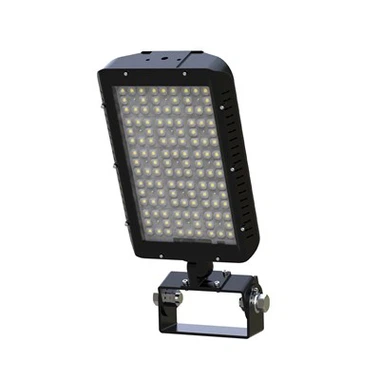
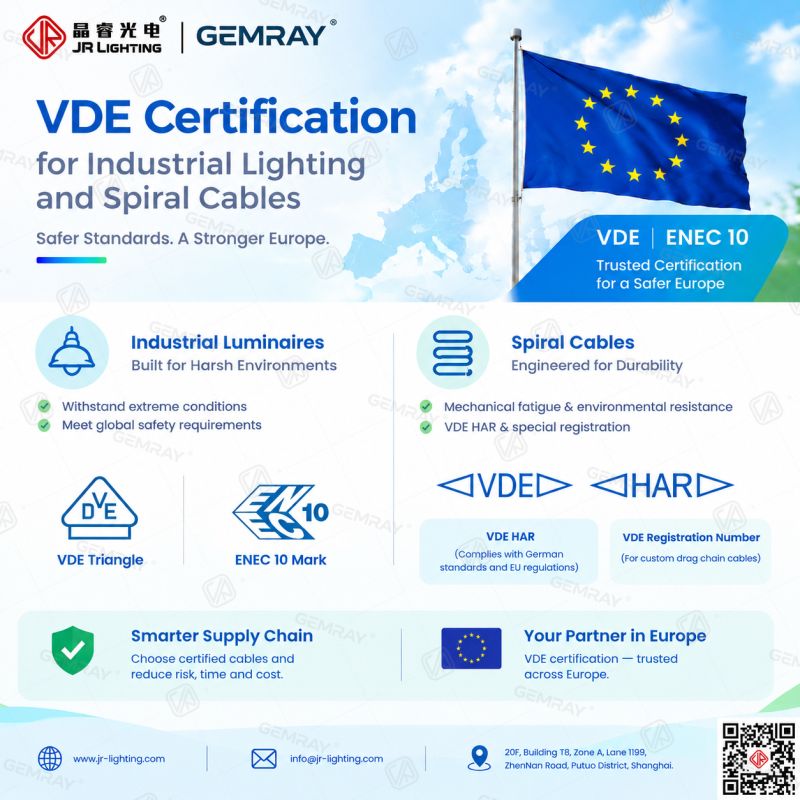
For industrial lighting equipment such as high bay or heavy-duty fixtures, the VED evaluation focuses heavily on environmental endurance and extreme thermal management. Since these products operate in complex environments, their plastic components must pass rigorous high-temperature glow wire tests to ensure total flame retardation during potential electrical failures. Furthermore, the certification process strictly evaluates equipment grounding continuity and the photobiological safety of high-power LEDs. Finished lighting products that clear all technical hurdles will earn the universally recognized VDE triangle icon on their nameplates. Companies targeting the broader pan European market can also leverage this process to obtain the highly regarded ENEC 10 mark to further strengthen their competitive position.
In contrast, the evaluation criteria for the dynamic spiral cables used in these industrial setups shift entirely toward mechanical fatigue and environmental resistance. The testing protocol heavily emphasizes the recoil recovery force after the cable is stretched to several times its original length across tens of thousands of continuous cycles. Industrial-grade polyurethane jacketed cables must also withstand extreme challenges, including long-term industrial oil immersion and severe temperature fluctuations. Interestingly, the certification identity for these materials is not represented by a famous triangle icon. Instead, the compliance status is directly printed in continuous loops at regular intervals along the outer insulation. Seeing the VDE HAR text printed on the wire jacket indicates that the cable complies with both German standards and European harmonized regulations, whereas special custom drag chain cables will feature an exclusive VDE registration number to verify their authenticity.
Understanding this structural distinction leads to a highly practical supply chain strategy for hardware manufacturers. When purchasing external matching spiral cables, choosing wires that already carry these specific VDE markings on their jackets can exempt your finished equipment from random component testing during the full machine certification process. This straightforward supply chain decision significantly shortens your time to market and saves your team substantial testing fees.
Navigating product compliance in the European market involves many hidden strategic details just like this one. I would love to hear from you all on this topic. What specific certification challenges have you encountered in your engineering or supply chain operations when expanding overseas? Drop your experiences and questions in the comments below so we can discuss the best compliance solutions together.
Contact us:
www.jr-lighting.com
info@jr-lighting.com