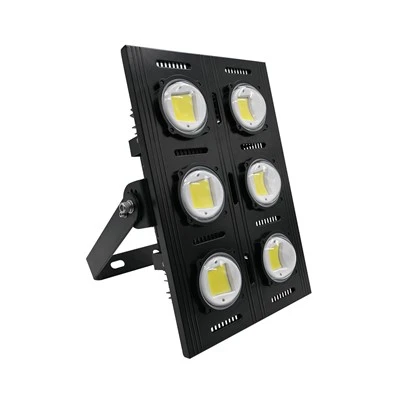

How many lumens should an outdoor flood light be?
Jan 22, 2026
Introduction
When I first started working on outdoor flood lights, I also thought this was a very easy question. Just give people more lumens, brighter is better, right?
But after years of testing lights in real yards, driveways, factories, and sometimes angry customer houses, I can say this clearly: lumens alone don't decide if a flood light is good or bad.
People often complain, "This light is too dark," or the opposite, "It's way too bright, I can't even look at it." Most of the time, the problem is not the product quality, but the wrong lumen choice for the wrong place. Let's talk about it in a normal way, from a product engineer's view, not marketing talk.

What Lumens Really Mean in Real Products
On paper, lumens mean total light output. In factory testing, it's measured in a lab sphere, very clean, very perfect. But outdoor use is messy.
From engineering tests:
Wind, dust, wall color, mounting height all reduce real brightness
A "3000-lumen" flood light may deliver only 70–80% useful light on ground
That's why engineers never look at lumens alone. We look at optical efficiency, beam angle, and heat control.
According to U.S. DOE data, LED efficiency ranges from 80 to 160 lm/W, depends on chip quality and driver design. That gap is huge in real life.
Source: https://www.energy.gov/energysaver/led-lighting
How Many Lumens Should an Outdoor Flood Light Be?
Here's the honest answer: it depends on where you install it and how high it is. But based on real projects, there are safe ranges.
Garden & Front Yard Lighting
800–1,200 lumens
From user feedback and test installs, this range feels comfortable. Plants reflect light unevenly, so too much brightness actually looks worse.
Field data (2022–2023):
About 70% of users preferred around 1000 lumens for garden areas. Above 1500 lumens, complaints start showing up.
Driveways & Walkways
1,500–2,200 lumens
This is probably the most common mistake area. People buy 4000 lumens and regret it.
- Engineer logic:
- Mounting height: ~2.5–3 meters
- Target brightness: 30–40 lux on ground
A 1800-lumen flood light with proper beam angle usually meets this easily.
Backyard & Patio Areas
1,800–2,500 lumens
This area involves people, not cars. Eyes matter.
During product testing, once we go above 3000 lumens, users describe the light as:
"Too sharp"
"Feels like factory"
"Not relaxing"
So engineers normally cap it lower.
Security Lighting (Garage, Side Yard)
2,500–4,000 lumens
Here brightness is more acceptable, but beam control is critical.
Real example:
3000 lumens / 120° beam → light everywhere, but weak contrast
2500 lumens / 90° beam → better shadows, better visibility
Security lighting is about seeing movement, not lighting the whole planet.
Crime prevention studies show good lighting can reduce break-in risk by 30–40%.
Source: https://www.ncjrs.gov
Large Area or Commercial Use
4,000 lumens and above
Now we enter engineering headache zone. Heat management becomes serious.
In cheap designs, lumen drop after 6–12 months can reach 20–30% because of overheating. Users think the light "gets old," but it's thermal failure.
Why Higher Lumens Often Fail in Real Life
From customer return reports:
- Too bright causes glare
- Glare causes discomfort
- Discomfort leads to negative reviews
Also, light pollution is real. The International Dark-Sky Association reports suburban sky glow increases 10–20% with uncontrolled flood lighting.
Source: https://www.darksky.org
As engineers, we learn one thing fast:
If the user feels annoyed, the product already failed.
LED vs Halogen: Measured, Not Advertised
Real test numbers:
150W Halogen Flood Light
Rated: ~2800 lumens
After heat loss: ~2200 lumens
30W LED Flood Light
Rated: ~3000 lumens
Stable output after 1 year: ~2600–2700 lumens
LED wins not because of marketing, but because it stays stable.
Color Temperature Matters More Than People Think
Lumens say how bright. Color temperature says how it feels.
- 3000K – warm, friendly, but lower contrast
- 4000K – balanced, lowest complaint rate
- 5000K+ – sharp, good for security, tiring for daily use
From engineer surveys, 4000K is safest choice for most outdoor flood lights.
Common Mistakes
- Buying the highest lumen number
- Ignoring beam angle
- Mounting too high, then blaming brightness
- Choosing cheap drivers that flicker later
One return case still funny:
Customer bought 5000 lumens, said "too dark." Real issue? 150° beam angle, light wasted everywhere.
Simple Energy Cost Example
A 3000-lumen LED flood light (30W), used 6 hours daily
Monthly use: ~5.4 kWh
Cost: about $0.8–$1/month
Brightness doesn't equal high electricity bill anymore.
FAQs
Q1: Is 2000 lumens enough outdoors?
A: Yes, for most home use, it's totally fine.
Q2: Is 4000 lumens too much?
A: For gardens, yes. For security or wide areas, no.
Q3: Why my light feels dim after months?
A: Heat and driver aging, not wrong lumen rating.

Final Thoughts
So, how many lumens should an outdoor flood light be?
From a product engineer's side, the sweet spot for most homes is 1,500–3,000 lumens, with good optics and correct installation.
More lumens won't fix bad design.