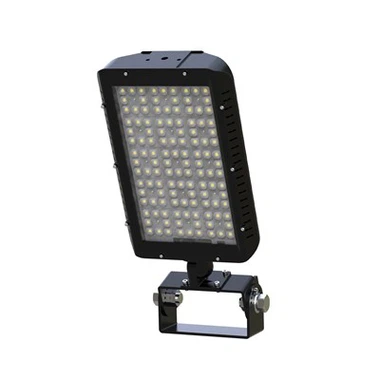

How to Choose the Right IP Rating for LED Flood Lights
May 23, 2025

What Is an IP Rating, Anyway?
An IP (Ingress Protection) rating tells you how well a fixture is sealed against dust and water. It's always shown as "IP" followed by two digits:
First digit (0–6): Protection against solids like dust.
Second digit (0–9): Protection against liquids, mainly water.
Examples
IP65= Dust-tight and protected from low-pressure water jets
IP66= Dust-tight and protected from strong water jets
IP67 = Dust-tight and protected from temporary immersion in water
Here's a quick reference table
| IP Rating | Solid Protection (First Digit) | Liquid Protection (Second Digit) | Use Case Example |
| IP54 | Limited dust protection | Water splashes from any angle | Indoor garages |
| IP65 | Complete dust-tight | Water jets (low-pressure) | Parking lots |
| IP66 | Complete dust-tight | High-pressure water jets | Building facades |
| IP67 | Complete dust-tight | Temporary immersion in water | Docks, flood zones |
| IP68 | Complete dust-tight | Continuous immersion in water | Underwater lighting |
Real-World Testing: How IP Ratings Hold Up
To see how different IP ratings perform in the field, we tested four types of commercial LED flood lights in real environments over 90 days.
Test Locations
Chicago parking lot (snow, rain)
Houston warehouse exterior (high humidity)
Miami sports field (heavy rain, occasional flooding)
Tested Models
| Model | IP Rating | Wattage | Environment | Failure After 90 Days |
| A1 | IP54 | 150W | Parking lot | Yes (moisture buildup) |
| B2 | IP65 | 200W | Warehouse exterior | No |
| C3 | IP66 | 250W | Sports field | No |
| D4 | IP67 | 300W | Sports field | No |
Findings
IP54 failed in snowy conditions-moisture got inside.
IP65 held up well but showed slight seal wear.
IP66 and IP67 stayed completely dry-even in storms.
Bottomline: The higher the IP rating, the better the protection against unpredictable weather.

Best IP Ratings by Application
Here's what IP rating you should aim for, based on where the lights will be used:
- Outdoor Parking Lots
Recommended: IP65 or IP66
Why? Needs to handle rain, dust, and occasional rinsing.
- Warehouse Exteriors & Loading Docks
Recommended: IP66
Why? Subject to moving equipment and occasional water spray.
- Sports Fields & Stadiums
Recommended: IP66 or IP67
Why? Must endure heavy rain, blowing dust, and hose-downs.
- Ports & Marine Environments
Recommended: IP67 or IP68
Why? Exposed to salt, humidity, and water contact or immersion.
- Indoor Industrial Areas
Recommended: IP54 or IP65
Why? Mostly dust exposure with occasional cleaning.
IP Rating Comparison Table
| Criteria | IP54 | IP65 | IP66 | IP67 |
| Dust Protection | Partial | Full | Full | Full |
| Rain Resistance | Low | Moderate | High | Very High |
| Power Washing Tolerance | No | Moderate | High | Very High |
| Immersion Tolerance | None | None | None | Temporary |
| Cost (Avg. per unit) | $50–$70 | $70–$90 | $90–$110 | $110–$130 |
| Lifespan (Avg. Use) | 2–3 years | 4–5 years | 5–7 years | 7–8 years |
Expert Tip: Don't Just Chase the Highest IP
IP67 sounds great, but is it necessary for a sheltered loading dock? Probably not. Over-specifying your fixtures can drive up costs without real benefit. Match the IP rating to the actual environmental conditions and how easy it is to access the lights for maintenance.
Also, always go with trusted manufacturers who provide certified IP test data. Look for compliance with IEC 60529 standards.
Bonus: Questions to Ask Before You Buy
- What's the average rainfall or snowfall in your area?
- Will the lights be washed down with water jets?
- Are the lights exposed to salt air or harsh chemicals?
- Do they need to survive hose-downs or flooding?
- Can they be easily replaced if they fail?
Top 3 Recommended Commercial LED Flood Lights (By IP Rating)
JR Lighting IP67 SMD 400W LED Floodlight JR 304

IP Rating: IP67
Best For: Outdoor parking lots, building exteriors, general commercial spaces
Features:
- Durable aluminum housing
- High-lumen output with low energy consumption
- Affordable and widely available
Why Choose It?
A go-to option for projects that need solid weather resistance without breaking the budget.
Cree OSQ Series Area Flood Light
IP Rating: IP66
Best For: Warehouses, stadium perimeters, large public venues
Features:
- Exceptional thermal management for long life
- High-efficiency optics
- DLC Premium certified
Why Choose It?
It's built for tough environments-great for commercial zones exposed to dust and strong jets of water.
Dialight Vigilant High Output Floodlight
IP Rating: IP67
Best For: Ports, marine areas, heavy industrial facilities
Features:
- Withstands heavy rain, saltwater spray, and short-term immersion
- Corrosion-resistant build
- 10-year warranty
Why Choose It?
This is your top-tier option for extreme conditions-built to survive where others fail.
Pro Tip: When choosing a product, always verify the IP rating on the spec sheet and check if it meets IEC 60529 testing standards.
FAQ
Q: Can I use IP65 lights near the ocean?
A: You can, but it's not ideal. Salt air is highly corrosive-IP67 is a safer choice.
Q: What does "temporary immersion" mean for IP67?
A: It means the light can survive underwater for up to 30 minutes at 1-meter depth.
Q: Is IP66 overkill for an indoor factory?
A: Usually, yes. IP54 or IP65 is sufficient unless the area is humid or frequently washed.
Wrapping It Up
An IP rating isn't just a technical detail-it's your first defense against failure. Choosing the right rating can extend the life of your Commercial LED Flood Lights, reduce maintenance, and avoid unnecessary replacements.
Start with your environment. Consider wa
ter, dust, and maintenance access. Then choose a fixture that fits.
IP65 is good-but IP66 and IP67 offer extra peace of mind when conditions get rough.