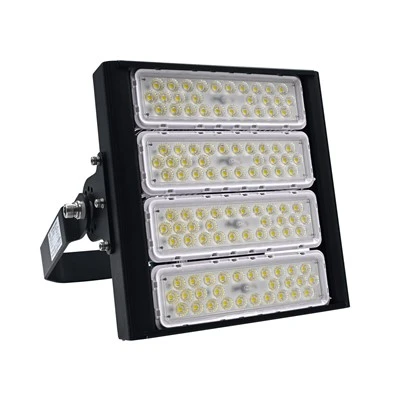

How to Specify a High Quality Solar Street Light
Nov 20, 2026
Procurement teams and municipal specifiers replacing grid-tied poles or outfitting off-grid roadways face an immediate verification problem: supplier datasheets routinely conflate peak theoretical output with sustained field performance. When selecting a high quality solar street light, buyers must separate verified electrical and photometric capacity from inflated retail wattage claims before issuing a purchase order. A miscalculated battery bank or unverified optical distribution leads directly to dark roadways during consecutive overcast days and costly bucket-truck replacements within two years.

Specifying a High Quality Solar Street Light
Evaluating off-grid roadway luminaires requires comparing physical system capacity under defined environmental conditions rather than relying on headline wattage labels. The baseline comparison below contrasts typical consumer-grade all-in-one units against commercial specification-grade systems.
| Parameter | Commercial Spec-Grade | Consumer / Retail Grade | Unit | Operating / Test Condition | Source / Basis |
|---|---|---|---|---|---|
| Continuous LED Load | 60–150 | 15–60 | W | Steady-state thermal equilibrium, 25 °C ambient | Industry engineering baseline |
| Declared Equivalent Rating | Not used (rated by real W) | 600–12,000 | W | Marketing equivalence; not established on an equivalent basis | Retail listing conventions |
| System Luminous Efficacy | 160–210 | Not established on an equivalent basis | lm/W | IES LM-79 photometric test at rated drive current | Commercial luminaire spec norms |
| Battery Chemistry & Life | Grade-A LiFePO4 (2,000–4,000) | Recycled Li-ion or lead-acid | Cycles | 80% depth of discharge (DoD), 25 °C cell temp | Battery cell manufacturer norms |
| Charge Controller | MPPT (95%–98% efficiency) | PWM | % | Nominal PV array voltage under partial irradiance | Power electronics engineering |
| Overcast Autonomy | 3–5 | 1 | Nights | Full nightly runtime without solar recharge, adaptive dimming | Municipal specification standard |
| Ingress & Impact Rating | IP66 / IK08–IK10 | IP65 / unrated IK | Rating | IEC 60529 dust/water jet; IEC 62262 impact | International test standards |
| Housing & Wind Load | ADC12 die-cast aluminum; EPA certified | ABS plastic or thin-gauge aluminum | Class | 6–12 m pole height; site-specific wind zone | Structural engineering specs |
Where It Fits-and Where It Does Not
A specification-grade solar luminaire fits perimeter roadways, industrial park access lanes, municipal pathways, parking lots, and remote infrastructure sites where trenching for grid power exceeds fixture capital costs. Properly sized LiFePO4 systems with thermal management operate reliably across -20 °C to 60 °C ambient temperatures when paired with adaptive dimming profiles and Type II or Type III roadway optics.
It does not fit every site. High-mast installations above 15 m, airport aprons requiring strict aviation glare compliance, and continuous high-output sports courts exceed the energy-harvesting footprint of pole-mounted photovoltaic panels. Similarly, heavily shaded urban canyons or high-latitude regions experiencing prolonged winter cloud cover beyond five consecutive days require either oversized split-array configurations or grid-tied redundancy rather than standard integrated units.
Procurement Judgment Beyond Sticker Price
Experienced North American and European buyers treat unit sticker price as secondary to lifecycle predictability. In commercial lighting procurement, 66% of industrial buyers prioritize delivery reliability over fastest possible shipping, while 54% always calculate total cost of ownership (TCO) and 67% consider supplier-assisted TCO modeling very helpful. Because 65% of buyers remain open to switching suppliers within a 12-month window, vendors that provide verifiable documentation win repeat framework contracts.
Shortlisting should center on four auditable checkpoints:
- Cell traceability and BMS documentation: Require batch test reports confirming Grade-A LiFePO4 cells and active battery management system (BMS) low-temperature charging cutoffs.
- Photometric files: Insist on IES or LDT files verified under LM-79 protocols rather than raw LED chip lumen totals, ensuring uniform roadway lux levels without upward light spill.
- Structural EPA ratings: Confirm Effective Projected Area (EPA) calculations for both the luminaire and solar module to match local municipal pole wind-load codes.
- Field serviceability: Prioritize modular designs with accessible battery compartments and replaceable MPPT controllers over sealed, glued housings that force full-fixture disposal.
Conditional Recommendation
For municipal roadways, commercial parking lots, and industrial perimeters lacking nearby grid distribution, a split-system or heavy-duty modular high quality solar street lightusing Grade-A LiFePO4 storage, an MPPT controller, and LM-79 verified Type II/III optics is the stronger choice because it sustains 3–5 nights of autonomous operation without thermal degradation. This assessment rests on standard industry engineering baselines; site-specific pole sizing and winter insolation autonomy still require confirmation through local solar irradiance modeling and structural wind-load review before final sign-off.