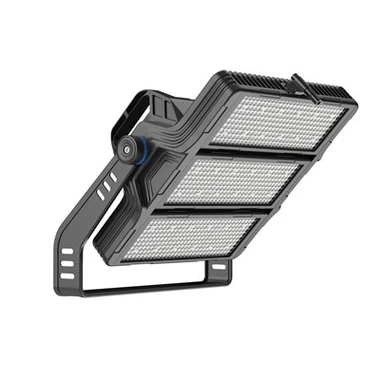

LED Floodlighting for Ports: Key Technical Requirements, Applications and Selection Guide
Nov 18, 2026
Introduction
Ports are essential hubs for global trade, where cargo handling, container transport, and ship loading and unloading often continue through the night. Reliable lighting is therefore essential to maintaining visibility, operational efficiency, and safety across port facilities.
However, illuminating a large port terminal presents several challenges. Extensive open areas require sufficient light coverage, while cranes, stacked containers, and other structures can create shadows and uneven illumination. At the same time, coastal environments expose lighting equipment to moisture, salt-laden air, and changing weather conditions, placing additional demands on product durability.
For these reasons, selecting LED floodlights for port applications involves more than simply choosing higher wattage or greater lumen output. Optical performance, lighting uniformity, thermal management, and environmental protection all play important roles in long term lighting performance.

Core Technical Requirements for Port Floodlighting
Illuminance and Uniformity
Large port facilities require consistent illumination to support cargo handling, vehicle movement, and equipment operation. While sufficient average illuminance is important, it does not necessarily guarantee good visibility across the entire working area.
Illuminance uniformity is another important factor. It describes how evenly light is distributed across a designed area and can be evaluated using the following formula.
U₀ = E_min / E_avg
Where:
- U₀ represents overall illuminance uniformity.
- E_min represents minimum illuminance.
- E_avg represents average illuminance.
A low uniformity value may indicate significant differences between bright and dark areas. In container yards and cargo handling zones, these variations can make it more difficult for workers and vehicle operators to identify obstacles and perform visual tasks.
A well-designed lighting system should therefore balance average illuminance with uniformity, taking into account the specific activities and dimensions of each working area.
Beam Angle and Optical Distribution
Beam angle directly influences how light is distributed across a target area. In port lighting applications, the appropriate optical distribution depends on installation height, mounting position, lighting distance, and the dimensions of the area being illuminated.
Narrow beam distributions can concentrate light over longer distances, while wider distributions can cover larger areas from suitable mounting positions. However, selecting an unsuitable beam angle may result in overlapping bright spots, in overlapping bright spots, insufficient coverage, or unnecessary light spill.
For large container terminals, optical planning should consider the relationship between individual luminaires rather than evaluating each floodlight independently.
Photometric data, including beam distribution curves and lighting simulation results, can help engineers determine suitable beam angles and mounting arrangements before installation.
Mounting Height and Lighting Layout
High mast lighting is commonly used in large port facilities because elevated mounting positions allow floodlights to cover extensive outdoor areas.
However, increasing mounting height does not automatically improve lighting performance. Greater installation heights may require different beam distributions and carefully calculated aiming angles to maintain sufficient illuminance at ground level.
Lighting designers should consider several factors when planning a port lighting layout, including the dimensions of the target area, pole positions, mounting height, luminaire output, and surrounding structures.
A suitable lighting arrangement should provide sufficient coverage while minimizing dark zones and unnecessary overlapping illumination.
Glare Control and Visual Comfort
Glare is an important consideration in port environments, where workers, truck drivers, and crane operators need to maintain clear visibility during nighttime operations.
Excessive brightness within the field of view can cause visual discomfort and make it harder to identify objects and surrounding hazards. poorly directed floodlights may also create unnecessary light spill beyond the intended working area.
Effective glare control requires more than selecting a suitable light source. Luminaire aiming angles, mounting positions, optical distribution, and installation height should all be considered during lighting design.
Properly directed lighting can improve visibility across working areas while reducing unnecessary illumination of surrounding spaces.
Thermal Management and Environmental Protection
Port lighting equipment may operate for extended periods in demanding outdoor environments. Moisture, salt-laden air, temperature variations, and airborne contaminants can affect the long-term performance of lighting equipment.
Thermal management is equally important. Excessive operating temperatures can accelerate LED lumen depreciation and affect the reliability of electronic components.
An effective heat dissipation structure helps transfer heat away from critical components and supports more stable operating temperatures.
Environmental protection should also be evaluated through several aspects.
Housing materials and surface treatment influence resistance to corrosion and environmental exposure.
Ingress protection indicates the level of protection against dust and water entering the luminaire. The appropriate IP rating should be selected according to the installation environment.
Corrosion resistance requires separate consideration, particularly in coastal areas where salt deposits can gradually affect exposed materials and surfaces. Salt mist testing, such as the cyclic test described in IEC 60068-2-52, can provide a reference for evaluating material and equipment performance in salt-laden environments.
These factors should be assessed together when selecting floodlights for long-term port operations.
Industry Standards and Technical Considerations
Port lighting projects should be designed with reference to applicable outdoor workplace lighting requirements and relevant product standards.
EN 12464-2 addresses lighting requirements for outdoor workplaces. It provides a reference for evaluating illuminance, uniformity, and visual conditions according to different outdoor activities.
CIE 150 guides limiting the effects of obtrusive light from outdoor lighting installations. It is particularly relevant when considering light spill and the environmental impact of large outdoor lighting systems.
IEC 60529 defines the IP Code used to classify the degrees of protection provided by electrical enclosures against dust and water ingress.
IEC 60068-2-52 specifies cyclic salt mist testing for components and equipment intended for exposure to salt-laden atmospheres. It can be considered when evaluating corrosion-related environmental performance.
These standards address different aspects of lighting design, product protection, and environmental testing. They should not be treated as interchangeable requirements or as automatic proof that a particular floodlight is suitable for every port environment. Project specifications and applicable local regulations should always be checked before equipment selection.
Practical Applications and Selection Guide
Different areas within a port facility have different lighting requirements. Understanding these differences helps engineers select suitable floodlights and develop more effective lighting layouts.
Container Yards
Container yards cover extensive areas where containers are stacked and transported by handling equipment. Lighting design should prioritize sufficient coverage, appropriate mounting heights, and uniform illumination across operational Zones.
Quay and Loading areas
Quay areas involve ship loading and unloading, crane operations, and cargo transfer. Lighting should support clear visibility around working surfaces and equipment while considering glare control and the visual requirements of operators.
Bulk Cargo Handling Areas
Bulk cargo terminals may include conveyors, loading equipment, and large material storage areas. Floodlights should provide suitable illumination around machinery and cargo handling zones without creating unnecessary shadows.
Port Access Roads
Roads within port facilities are used by trucks, service vehicles, and other transportation equipment. Continuous visibility, suitable light distribution, and glare control are important considerations for nighttime vehicle movement.
When selecting LED floodlights for these applications, engineers should evaluate more than rated power and lumen output. Beam distribution, installation height, thermal performance, environmental protection, and maintenance requirements should all be considered in relation to the actual project conditions.
Recommended Product
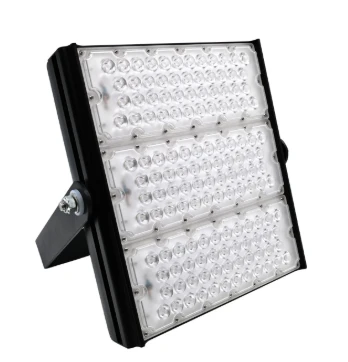
The JR302 LED Floodlight is designed for industrial and outdoor lighting applications, including port installations.
Compared with similar products, its stated light efficiency is increased by 8%, with light transmittance reaching 98%. Its air duct heat dissipation technology helps reduce overall weight while supporting effective heat dissipation, helping to limit LED lumen depreciation during operation.
The product also features a stated service life of up to 50,000 hours, quick response, flicker-free operation, and a wide working voltage. Its LED packaging technology is designed to support high luminous efficiency and stable performance.
With these features, JR302 provides a lighting option for ports and other demanding industrial applications where reliable illumination and long-term operating performance are important.
Frequently Asked Questions (FAQ)
Q1: What IP rating should LED floodlights have for port applications?
A: The appropriate IP rating depends on the installation location and exposure to dust, rain, and water jets. Areas exposed to more demanding outdoor conditions may require higher ingress protection. However, IP ratings do not indicate resistance to salt spray corrosion.
Q2: Why is corrosion resistance inportant for port lighting?
A: Coastal environments contain salt-laden air that can accelerate the corrosion of exposed metal components and surface coatings. Suitable materials, protective finishes, and relevant corrosion testing can help evaluate the durability of lighting equipment.
Q3: How do you choose the right beam angle for port floodlights?
A: Beam angle selection depends on mounting height, lighting distance, target area dimensions, and the required light distribution. Photometric data and lighting simulations are useful tools for determining an appropriate optical solution.
Q4: Why is lighting uniformity important in container yards?
A: Good lighting uniformity helps reduce significant differences between bright and dark areas. This supports more consistent visibility for workers, drivers, and equipment operators during nighttime operations.
Conclusion
Reliable port lighting requires a balanced approach to optical performance, lighting uniformity, glare control, thermal management, and environmental protection. Choosing suitable LED floodlights is therefore an important part of developing an effective outdoor lighting system.
From container yards and quay areas to cargo handling facilities and access roads, each application requires careful consideration of its operating conditions and lighting objectives.
With its efficient light output, air duct heat dissipation design, and stated 50,000- hour service life, the JR302 LED Floodlight offers an option for port and industrial lighting applications.
Selecting the right lighting solution can help create more consistent illumination and support reliable nighttime operations across port facilities.