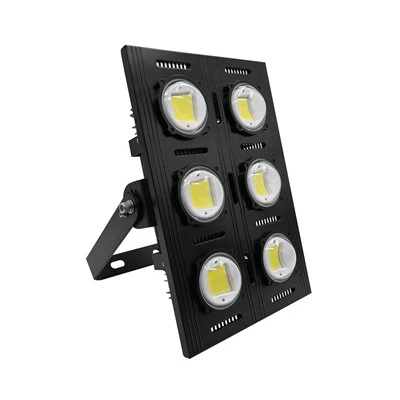

The Science of Effective Fireground Scene Lighting
Nov 20, 2026
Introduction
Firefighting and rescue operations rarely take place under ideal lighting conditions. Many emergencies occur at night, in poorly lit areas, or in environments where smoke, dust, rain, and other obstacles reduce visibility. Under these conditions, reliable scene lighting becomes an essential part of emergency response operations.
For firefighters, adequate lighting is not simply about making an emergency scene brighter. It helps identify hazards, locate equipment, assess surrounding conditions, and carry out rescue tasks without unnecessary visual interference.
However, a common misconception in emergency lighting design is that higher lumen output automatically means better illumination. In practice, a lighting system with excessive brightness but poor light distribution may create intense hotspots, deep shadows, and uncomfortable glare. These conditions can make it more difficult for personnel to move between different working areas.
Effective Fireground scene lighting therefore requires a more comprehensive approach. Illuminance, uniformity, beam distribution,glare control, and fixture placement all influence how well a scene is illuminated and how comfortably firefighters can perform their duties.
Understanding these principles helps explain why good emergency lighting design is about controlling light, not simply increasing its output.
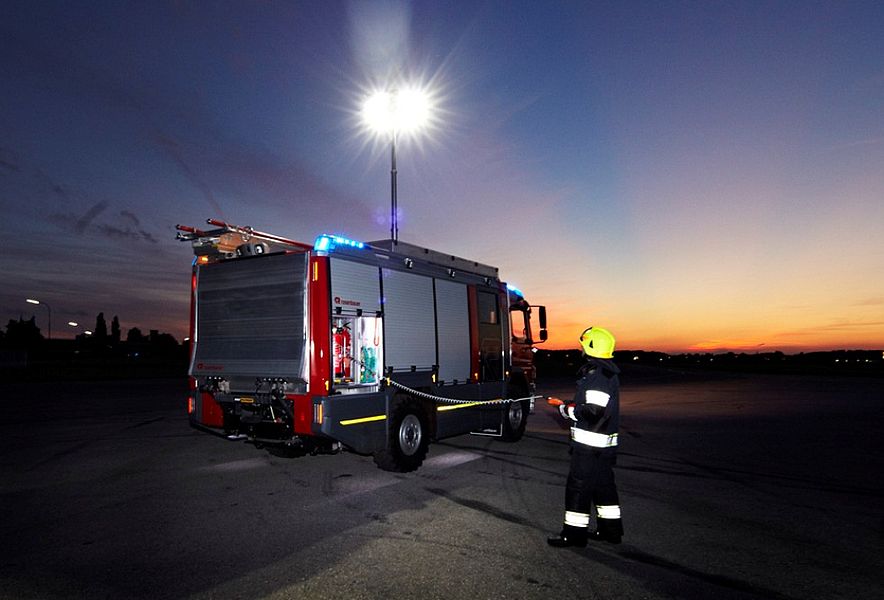
Core Technical Requirements
Illuminance and Light Output: Understanding the Difference Between Lumens and Lux
One of the most important concepts in scene lighting design is the difference between luminous flux and Illuminance.
Lumens (lm) measure the total amount of visible light emitted by a light source or luminaire. This value describes the light output of a fixture, but it does not directly indicate how much light reaches a particular working surface.
Lux (lx) measures illuminance, representing the amount of luminous flux received per unit area. One lux is equal to one lumen per square meter.
This distinction is particularly important in fireground operations because the effectiveness of a lighting system depends on how much light actually reaches the working area.
For example, a high-output floodlight with a narrow beam may produce strong illumination in a relatively small area while leaving surrounding spaces poorly illuminated. Another fixture with a wider distribution may cover a large area but deliver lower illuminance at individual points.
The appropriate lighting arrangement depends on the nature of the visual tasks being performed.
When evaluating Scene lighting, engineers should consider:
- Average Illuminance: The average light level across the intended working area.
- Minimum Illuminance: The lowest measured light level within that area.
- Illuminance Uniformity: How consistently light is distributed across the working surface.
Uniformity is especially important when firefighters need to move continuously between the apparatus, equipment storage areas, and the incident scene.
A lighting system should therefore be evaluated through its actual photometric performance rather than lumen output alone.
Lighting Uniformity: Reducing Bright and Dark Areas
Lighting uniformity is a major consideration in emergency scene illumination.
When one area is extremely bright while an adjacent area remains relatively dark, firefighters must repeatedly adapt their vision when moving between these environments. Such changes can make it more difficult to identify objects and recognize potential hazards.
A more evenly distributed lighting environment can help reduce these abrupt transitions.
Several factors influence lighting uniformity:
- Fixture Distribution: The number and arrangement of lighting fixtures around the apparatus.
- Beam Overlap: How individual light beams combine to illuminate the working area.
- Mounting Height: The vertical distance between the fixture and the illuminated surface.
- Beam Angle: The angular distribution of light emitted by the fixture.
- Obstructions: Vehicles, equipment, structures, and personnel that interrupt light distribution.
A useful approach is to distribute lighting across multiple positions instead of concentrating all available output in one direction.
The Fire Apparatus Manufacturers' Association (FAMA) discusses this principle in its guidance on fire apparatus lighting placement. Its recommendations emphasize the importance of consistent illumination around the vehicle and working area rather than relying on one extremely bright location.
This demonstrates that lighting uniformity can be just as important as overall light output when designing an effective emergency lighting environment.
Beam Distribution and Lighting Coverage
Beam distribution determines where light is directed and how it spreads across the surrounding environment.
In fireground applications, different lighting tasks may require different beam patterns.
Flood Beam
Flood beams distribute light across a relatively wide area. They are generally suitable for illuminating nearby working spaces, equipment areas, and broader operational zones.
Spot Beam
Spot beams concentrate light into a narrower area. They are more appropriate when visibility is needed over a longer distance or when attention must be directed toward a specific location.
Combination Beam
Combination beam patterns integrate wider and narrower distributions to provide both near-field coverage and more focused illumination.
Choosing an appropriate beam pattern requires a different distribution from illuminating a road accident scene several meters away.
For example, illuminating an area immediately beside a fire truck requires a different distribution from illuminating a road accident scene several meters away.
Beam angle alone, however, does not provide a complete picture of lighting performance. Two fixtures with identical beam angles may produce different illumination patterns because of differences in optical design, luminous output, and reflector or lens configuration.
Photometric distribution data, such as an IES or LDT file, can help engineers evaluate these differences and simulate lighting performance before installation.
Glare Control and Visual Comfort
Glare is another important challenge in nighttime emergency operations.
It occurs when excessive brightness or strong luminance contrasts create visual discomfort or reduce the ability to see important objects.
In fireground environments, glare may originate from directly visible light sources, reflected light from wet surfaces, or poorly positioned fixtures.
Direct glare can become particularly problematic when scene lights are installed at positions that expose firefighters to the light source within their normal field of view.
Several design considerations can help reduce glare:
- Mounting Height: Positioning fixtures higher can help direct light toward the working area rather than directly into personnel's eyes.
- Lighting Direction: Adjusting beam angles can reduce unnecessary light exposure outside the target area.
- Optical Design: Appropriate lenses and reflectors can help control light distribution.
- Fixture Placement: Lighting positions should account for the normal movement and working directions of personnel.
- Brightness Balance: Avoiding excessive differences between adjacent illuminated areas can improve visual comfort.
Overhead lighting systems, including elevated light towers, can provide useful advantages by directing light downward from above the working area.
However, increasing mounting height alone does not guarantee glare-free lighting. The final result still depends on beam direction, fixture intensity, and the position of personnel.
Shadow Management and Fixture Placement
Shadows are unavoidable whenever an object blocks a light source. However, poorly planned fixture placement can create large or misplaced shadows that interfere with emergency operations.
Fire trucks themselves can become significant obstructions because of their size, body structure, equipment compartments, and external accessories.
For example, a floodlight mounted behind a raised body section may illuminate the surrounding ground while leaving a dark area directly beneath or beside the vehicle.
Similarly, personnel and rescue equipment may create additional shadows when several light sources are concentrated in the same direction.
Effective shadow management requires considering the entire lighting environment rather than evaluating each fixture independently.
Important considerations include:
Positioning fixtures to minimize obstruction from the vehicle body.
Using multiple lighting directions where practical.
Considering the relationship between the light source, illuminated object, and working surface.
Evaluating shadow locations in areas where personnel frequently move or handle equipment.
FAMA's technical guidance on fire apparatus lighting placement highlights how mounting positions and vehicle body structures can influence shadow formation.
The objective is not to eliminate every shadow, which is rarely practical, but to prevent shadows from obscuring important working areas.
Industry Standards and Technical References
Fire apparatus lighting involves both vehicle-related requirements and general lighting engineering principles. These should be considered separately when evaluating a lighting system.
NFPA 1900: Fire Apparatus Requirements
NFPA 1900, titled Standard for Aircraft Rescue and Firefighting Vehicles, Automotive Fire Apparatus, Wildland Fire Apparatus, and Automotive Ambulances, is an important reference for fire apparatus design and equipment.
The 2024 edition consolidates several previously separate NFPA standards, including NFPA 1901, which addressed automotive fire apparatus.
When designing or specifying lighting systems for fire trucks, the applicable provisions should be reviewed according to the vehicle category, equipment configuration, and intended application.
It is important to distinguish between mandatory requirements, recommended engineering practices, and optional equipment specifications. Not every general lighting recommendation represents a specific NFPA requirement.
FMVSS 108: Vehicle Lighting and Visibility
In the United States, FMVSS No. 108 addresses vehicle lighting, reflective devices, and associated equipment.
For fire apparatus, the relationship between scene lighting installations and required vehicle lighting should be considered during vehicle design.
In particular, additional lighting equipment should not obstruct required clearance lamps, identification lamps, or other regulated vehicle lighting components.
This is an important installation consideration when integrating scene lights into the vehicle body.
Photometric Evaluation and lighting Engineering
Photometric evaluation provides a technical basis for understanding how a lighting system performs.
Common measurement parameters include:
Luminous Flux (lm): Total visible light output.
Illuminance (lx): Light incident on a surface.
Luminous Intensity(cd): Light emitted in a particular direction.
Beam Angle: The angular spread of the light distribution, defined according to relevant measurement convention.
Illuminance Uniformity: The distribution of illuminance across a defined working area.
IES photometric files, including IES and LDT formats, can be used with lighting simulation software to assess fixture distribution and predict illumination patterns.
Actual measurements should also be considered when evaluating a completed installation because vehicle geometry, surrounding structures, and environmental conditions can influence the final lighting result.
Practical Applications and Selection Guide
Understanding lighting principles is only the first step. Effective scene lighting also requires considering the specific conditions under which emergency vehicles operate.
Road Traffic Accidents
Road accidents often occur at night or in locations with limited ambient lighting.
In these situations, scene lighting needs to cover the immediate working area, including the damaged vehicles, surrounding road surface, and locations where emergency personnel perform rescue operations.
Lighting should provide sufficient visibility without creating unnecessary glare for approaching traffic or personnel working near the apparatus.
A combination of wide-area illumination and more focused lighting may be useful, depending on the accident scene and road configuration.
Structural Fires and Urban Rescue Operations
Urban fire scenes often contain buildings, parked vehicles, narrow access routes, and other physical obstructions.
These structures can interrupt light distribution and create unexpected shadows.
Lighting arrangements should therefore consider the shape of the working area and the position of nearby obstacles.
Elevated lighting can help improve coverage from above, while additional lighting positions may be needed to illuminate areas that remain obstructed.
Wildland and Remote-Area Rescue
Wildland operations and remote-area rescues frequently take place in environments without reliable fixed lighting infrastructure.
Uneven terrain, vegetation, and large working distances create additional challenges.
In these conditions, lighting coverage should account for changes in ground elevation, potential obstructions, and the movement of personnel.
Wide-area illumination can support general operations, while more focused beams may assist with identifying specific locations or objects at a distance.
Evaluating a Fireground Lighting Arrangement
When evaluating an emergency scene lighting system, several practical factors should be considered together.
1. Define the Working Area
Identify where firefighters will move, retrieve equipment, and perform their tasks. The intended coverage area should reflect actual operational requirements rather than simply the maximum distance a light can reach.
2. Evaluate Photometric Performance
Review illuminance distribution, average and minimum values, and uniformity across the working area. Lumen output alone is insufficient for evaluating overall scene lighting performance.
3. Consider Fixture Positioning
Assess mounting height, installation location, and potential obstructions from the vehicle body and surrounding equipment.
4. Check Glare and Shadow Conditions
Evaluate the lighting arrangement from the positions where firefighters are expected to work. A lighting system that looks effective from outside the scene may create uncomfortable glare or unwanted shadows from an operator's perspective.
5. Verify Vehicle Integration
Consider electrical compatibility, mounting stability, environmental protection, and the visibility of required vehicle lighting components.
A complete evaluation should combine photometric analysis, installation review, and practical testing under representative operating conditions.
Frequently Asked Questions (FAQ)
Q1: Are higher lumen ratings always better for fire truck scene lighting?
A: No. Lumens measure the total light output of a fixture, but they do not indicate how evenly light is distributed across the working area. A fixture with higher lumen output may produce strong hotspots while leaving other areas poorly illuminated. Actual illuminance, uniformity, beam distribution, and glare should also be considered.
Q2: What is the difference between scene lighting and emergency warning lighting?
A: Scene lighting is designed to illuminate the surrounding working environment so firefighters can perform tasks safely and effectively. Emergency warning lighting is designed to make the apparatus more noticeable to other road users and communicate an emergency response situation. Although both systems may be installed on the same vehicle, they serve different purposes and should be evaluated according to their respective requirements.
Q3: Why is lighting uniformity important during nighttime rescue operations?
A: Uniform lighting helps reduce large differences between bright and dark areas. When personnel move repeatedly between these areas, their eyes need time to adapt to changing brightness levels. A more consistent lighting environment can make visual tasks more comfortable and help reduce the difficulty of identifying objects in darker areas.
Q4: How can glare be reduced in fireground lighting?
A: Glare can be managed through appropriate mounting heights, beam direction, optical design, and fixture placement. Positioning light sources above the normal working field of view and directing light toward the intended area can help reduce direct glare. However, the final arrangement should always be evaluated from the actual working positions of personnel.
Conclusion
Effective fireground scene lighting is a combination of optical performance, lighting distribution, installation design, and practical operational requirements.
High lumen output alone cannot guarantee good visibility. Illuminance, uniformity, beam distribution, glare control, and shadow management all contribute to the effectiveness of an emergency lighting environment.
As fire and rescue operations continue to take place in increasingly varied and challenging environments, lighting design needs to focus on more than simply producing brighter light.
The real objective is to create a consistent, well-controlled visual environment that supports firefighters throughout emergency operations.
By understanding the science behind scene lighting, fire apparatus designers and emergency service professionals can make more informed decisions when planning and evaluating lighting systems.