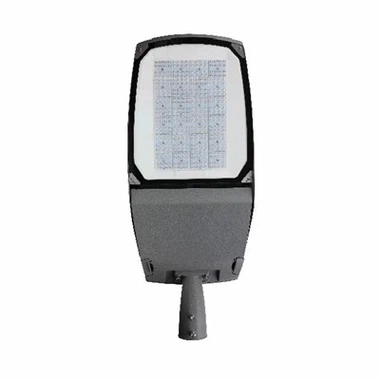

LED Floodlights vs. Spotlights: How to Choose the Right Beam
May 29, 2026
Introduction
When designing a commercial, industrial, or high-end residential lighting layout, navigating product specifications can be surprisingly nuanced. Two of the most common fixtures specified for these projects are LED floodlights and spotlights. While they might look similar on a spec sheet, they serve entirely different optical purposes.
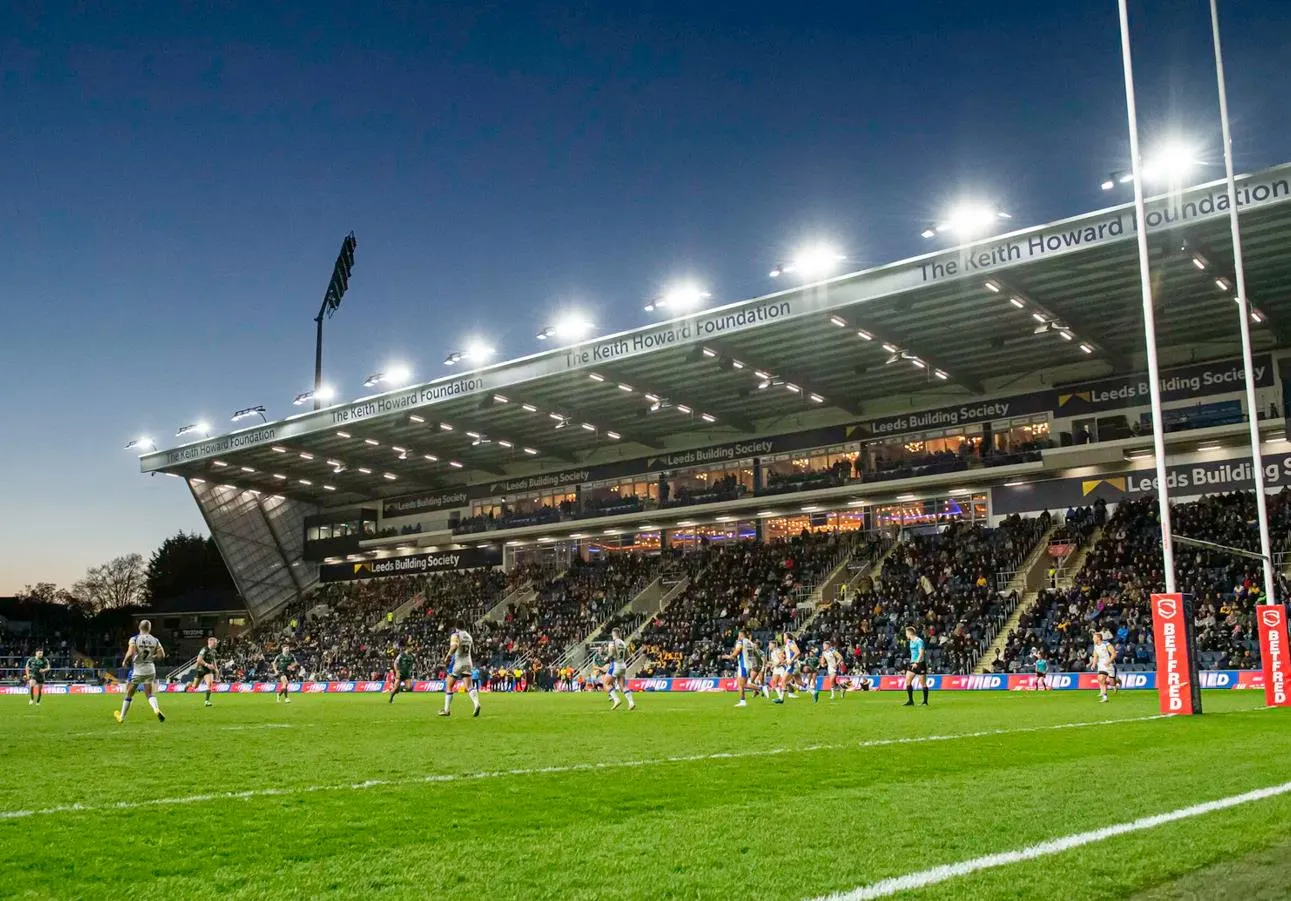
Selecting the wrong fixture not only ruins your visual design but also wastes energy and creates safety hazards. Floodlights deliver a wide, washed beam to illuminate vast expanses uniformly, making them staples in high-ceilinged industrial spaces and for perimeter security. Spotlights, by contrast, focus a highly concentrated beam to punctuate specific features, dramatic architectural elements, or theatrical subjects. This comprehensive guide breaks down the core distinctions, operational engineering, and application strategies to ensure your next project uses the perfect beam.
The Technical Breakdown: What Are LED Floodlights and Spotlights?
To maximize efficiency, a premium LED Flood Lights Manufacturer Supplier focuses heavily on optical control.
- LED Floodlights: These fixtures are engineered to cast a broad, highly uniform light field. Their primary function is area illumination, utilizing advanced optics to spread light evenly across wide zones. Standard floodlights typically operate with a beam angle between 90° and 120°, though architectural and high-mast variations push boundaries even further.
- LED Spotlights: Spotlights are the precise marksmen of lighting design. They feature highly directional optics that channel lumens into a tight, concentrated cone. Standard spotlights restrict their beam angles to a sharp 15° to 45°, generating high center-beam candlepower (lux) over small, targeted zones.
Core Logic: The Real Differences Between Spotlights and Floodlights
Understanding how these fixtures behave photometrically is key to maximizing performance and efficiency.
1. Beam Angles and Distribution
The defining technical characteristic separating these two fixtures is the beam angle. Floodlights use wide distribution curves-typically 90° to 120°, with specialty models extending to 180° - to blanket vast areas from a single source. Spotlights employ specialized internal reflectors or lenses to narrow the beam angle to 10° to 45°, punching light down long paths without spilling into surrounding areas.
2. Visual Impact and Light Effects
Floodlights create a soft, shadow-reducing environment. The light transitions smoothly at the margins, leaving blurred edges that eliminate harsh visual contrasts. Spotlights do the exact opposite. They generate high-contrast zones with sharp, defined edges and intensely bright centers. This isolates the target object from its darker surroundings, creating immediate visual drama and focus.
3. Power Profiles and Output
- Floodlights: Built to deliver massive lumen packages over enormous spaces. Their power spans from a modest 50W for small yards up to an intense 2000W for massive professional sports fields.
- Spotlights: Exceptionally efficient. Because the light is mechanically focused, even low-wattage fixtures (10W to 30W) can achieve incredibly high lux levels on a target area, matching the perceived brightness of much larger traditional lamps.
Do All Floodlights Have Wide Beam Angles?
A common misconception in the industry is that a floodlight must inherently have a wide beam angle. Photometrically, that is not true. Modern engineering allows heavy-duty architectural floodlights to be customized with tight, precise optics ranging from 15° to 120°.
The distinction lies in the design intent. For example, a sports stadium or a deep-set container port requires high-wattage fixtures installed on 15-meter (or higher) high-mast poles. To punch light down to the ground across that distance without losing lumens to atmospheric scatter, engineers specify a narrow beam angle (e.g., 15°, 30°, or 45°). Because the fixture is mounted so high, the narrow cone expands over the distance, ultimately achieving the original goal: a wide, uniform wash of light across the field. Therefore, any fixture designed to uniformly illuminate a large area is classified as a floodlight, even if it uses narrow-angle optics.
Application Blueprint: Choosing the Right Fixture for the Right Scene
Selecting the ideal fixture depends heavily on your specific environment, mounting heights, and operational needs.
Recommended LED Floodlight Specifications
| Application Area | Optimal Beam Angle | Power Range (Watts) |
| Squares, Plazas & Parking Lots | 90° – 120° | 100W – 400W |
| Factories & Large Warehouses | 60° – 90° | 100W – 300W |
| Architectural Facades | 120° – 180° | 50W – 200W |
| Sports Stadiums & Football Fields | 25° – 45° | 500W – 2000W |
| Commercial Gardens & Courtyards | 120° – 180° | 50W – 100W |
Recommended LED Spotlight Specifications
| Application Area | Optimal Beam Angle | Power Range (Watts) |
| Retail Windows & Product Exhibits | 10° – 25° | 20W – 50W |
| Indoor Art Galleries (Paintings/Sculptures) | 15° – 30° | 10W – 30W |
| Outdoor Landscape Features & Trees | 25° – 45° | 30W – 100W |
| Theatric Stage Followspots | 5° – 15° | 200W – 1000W |
Strategic Solution: High-Performance Industrial Lighting
To address severe operational challenges such as extreme vibrations, high heat, or moisture penetration, lighting plans require ruggedized hardware.
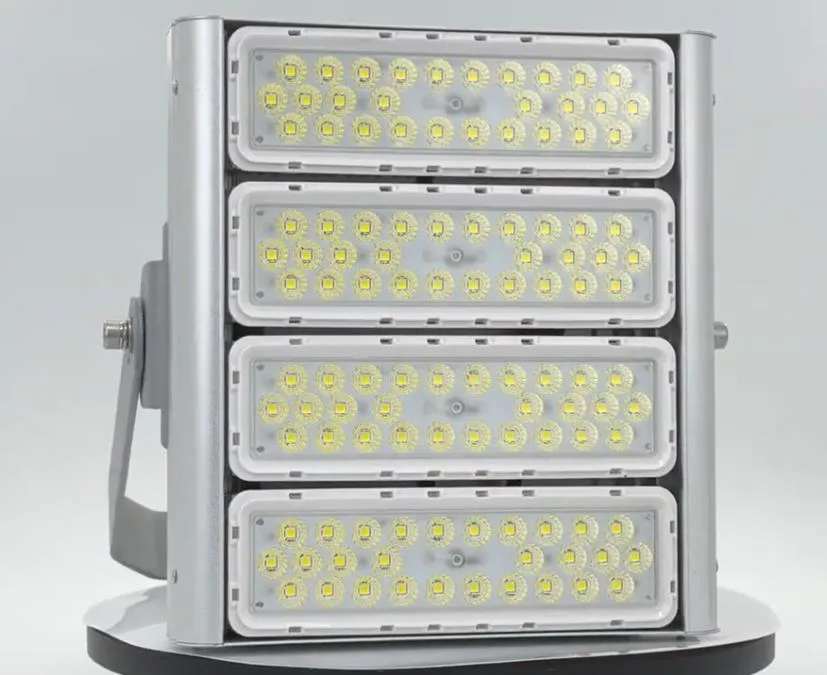
The JR309 Series LED Flood Light excels in these grueling commercial and industrial environments. Available in a versatile power envelope from 50W to a massive 600W, it features high-efficiency SMD Flood Light arrays that push up to an impressive 200 Lm/W. Built with customizable optics (25°, 40°, 60°, and 90°), an anti-shock arch-bridge design, and a dual-coupled IP67-rated chassis, the JR309 provides specialized, failure-free illumination for ports, factories, and sports fields. This rugged design solves a major pain point by eliminating the high maintenance overhead and frequent bulb failures common in demanding outdoor environments.
FAQs
Q1: What is the main difference between a spotlight and a floodlight?
A: The fundamental difference is beam angle and coverage area. A spotlight casts a narrow, concentrated beam (usually 10° to 45°) to highlight a specific point with crisp edges. A floodlight emits a wide, uniform beam (>90°) to illuminate massive areas with soft, blurred edges.
Q2: What are the primary outdoor flood light fixture waterproof standards to look for?
A: For demanding outdoor industrial and commercial environments, look for an IP65 rating at minimum, though an Outdoor Flood Light Fixture Waterproof IP67 rating is highly recommended. An IP67 rating ensures complete dust protection and guarantees the fixture remains fully sealed against high-pressure water jets and temporary submersion.
Q3: Which is better for outdoor security lighting: floodlights or spotlights?
A: Floodlights are generally superior for overall perimeter security because they illuminate large expanses uniformly, eliminating dark corners and blind spots where intruders could hide. Spotlights are reserved for long-distance perimeter fences or tracking specific access points and gates.
Q4: How does a COB LED flood light differ from an SMD alternative?
A: An SMD (Surface Mounted Diode) floodlight utilizes multiple independent LED chips spread across a board, providing excellent heat dissipation and a wide, uniform light spread. A COB Led Flood Light features a single, densely packed multi-chip array that creates a highly concentrated, single-point light source, offering excellent beam control for narrower flood layouts.
Final Thoughts
Choosing between an LED floodlight and a spotlight isn't a matter of which fixture is superior; it's about mapping the correct optical tool to your specific environment. If your goal is to eliminate shadows, bring uniform visibility to a factory floor, or secure a large parking lot, high-efficiency floodlights are your ideal solution. If you need to command attention, trace structural columns, or punch high-intensity light down a narrow path, a precise spotlight is the correct choice. Aligning your project's physical architecture with the proper beam distribution ensures an energy-efficient, visually striking, and completely optimized space.