


Lumens, Lux, Candela & Watts: Commercial Lighting Guide
Jun 01, 2026
Introduction
Navigating the technical specifications of modern industrial and commercial lighting can be daunting. With the rapid rise of solid-state LED technology, traditional benchmarks have shifted dramatically. Selecting the ideal commercial setups requires a clear understanding of specialized optical metrics.
Terms like Lumens, Lux, Candela, and Watts describe entirely different physical properties of light and power. Misinterpreting these variables often leads to under-illuminated facilities, excessive energy costs, or subpar operational safety. This guide breaks down these fundamental metrics, explains their practical relationships, and details how to execute accurate calculations for your facility.
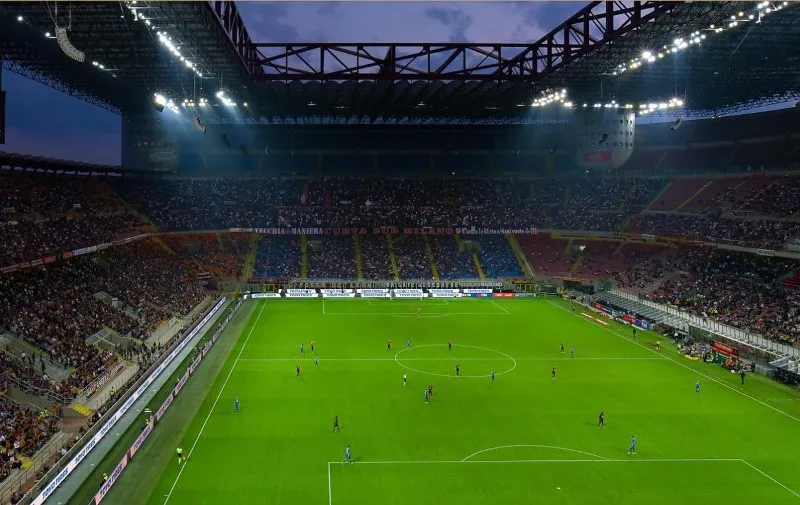
Decoding the Core Differences: Lumens vs. Candela vs. Lux
To design an effective facility layout, it is necessary to differentiate between total light volume, directional concentration, and surface brightness.
1. Lumens (lm): Total Light Output
Lumens measure luminous flux, representing the total amount of visible light emitted by a source in all directions simultaneously. It evaluates the raw capacity of a lamp, independent of how that light is focused or distributed.
2. Candela (cd): Directional Light Intensity
Candela measures luminous intensity, quantifying how much light is emitted in a specific, concentrated direction.
- High Candela: A laser pointer or a focused spotlight concentrates light into a narrow beam, resulting in high directional intensity even when the total lumen output is low.
- Low Candela: An omnidirectional A-shape light bulb scatters light widely across a room, creating a lower candela rating per given angle despite a high overall lumen output.
3. Lux (lx): Illuminance on a Surface
Lux measures illuminance, which dictates how much light actually hits a specific target area. One lux is mathematically defined as one lumen per square meter(1 lx=1lm/㎡). While lumens tell you how much light a lamp produces, lux tells you how much light the workspace actually receives. If a light fixture is mounted higher, the ground-level lux decreases because the same light flux spreads over a larger surface area.
| Metric (Concept) | Physical Definition | Unit | Primary Characteristic | Real-World Analogy |
| Luminous Flux | Total light emitted by a source | Lumen (lm) | Independent of beam direction | An omnidirectional bare bulb |
| Luminous Intensity | Light intensity in a specific direction | Candela (cd) | Highlights beam concentration | A tight flashlight beam |
| Illuminance | Density of light striking a surface | Lux (lx) | Dictates functional surface brightness | Light hitting a desktop |
The New Reality: Why Watts No Longer Measure Brightness
Historically, facility managers relied on Watts to judge brightness. This convention worked when legacy incandescent or high-pressure sodium lamps dominated the market, as higher power consumption was predictably correlated with light output.
With modern LED technology, Watts only measure electrical power consumption, not light output. Luminous efficacy-expressed in lumens per watt (Lm/W)-defines how efficiently a fixture converts electricity into visible light. For example, a legacy 60W incandescent bulb can be replaced with a highly efficient 10W LED bulb without sacrificing light output.
Practical Conversion Guide: Bridging the Technical Gaps
Converting Lumens to Watts
Direct mathematical conversion between lumens and watts is impossible without knowing the luminous efficacy of the specific system. To determine real power draw or light output, apply these formulas:
Watts = Lumens / Luminous Efficacy (Lm/W)
Lumens = Watts X Luminous Efficacy (Lm/W)
Example Calculation:
If you have a highly efficient LED fixture rated at 100Lm/W, the conversions scale predictably:
- 800 lm ÷ 100 lm/W = 8W
- 1,000 lm ÷ 100 lm/W = 10W
- 5,000 lm ÷ 100 lm/W = 50W
Converting Lux to Lumens
Because lux measures density per unit area, you must factor in the exact dimensions of the target surface to calculate total lumens:
Lumens (lm)= Lux (lx) X Area (㎡)
Lux(1x) = Lumens (lm) / Area (㎡)
- Measure surface illumination: Use a calibrated lux meter to test the light levels on a desk or floor. Let's say it reads 500 lx.
- Calculate area: Measure target length and width in meters (Area = length X width). For example, a workspace spanning 2 m²㎡.
- Compute total lumen requirement: Multiply the values together:
500 lx x 2 ㎡ =1,000 lm
Commercial Applications: Mitigating Real-World Lighting Challenges
Inadequate light distribution creates immediate operational risks. Under-lighting a floor compromises safety, while over-lighting causes intense glare, eye strain, and visual fatigue. Different environments demand tailored lux targets:
- Garages & Parking Structures: 100 Lx is sufficient for safe transit and navigation.
- Industrial Workshops & Precision Warehouses: 500 Lx is required to maintain manufacturing precision, safe handling, and high efficiency.
If you evaluate a 12㎡ workspace lit by a standalone 1,000 lm fixture, the surface illuminance drops to approximately 83 lx (1000 lm / 12㎡). This falls significantly below commercial indoor guidelines, creating a clear need for secondary lighting fixtures.
High-Performance Infrastructure Solutions
To hit strict lux targets without driving up your energy bills, you need advanced commercial fixtures. Choosing a premier LED Flood Lights Manufacturer gives you access to commercial-grade equipment built to handle demanding industrial setups.
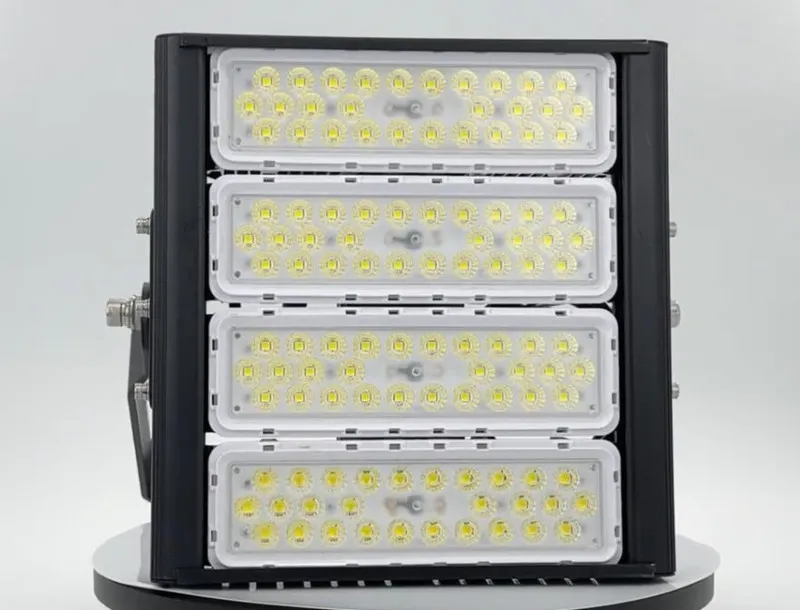
The heavy-duty JR304 Series of IP67 SMD floodlights offers scalable configurations from 150W up to 1000W. Engineered with ZAG lens technology, these outdoor flood light fixtures' waterproof options achieve an impressive 98% light transmittance and a luminous efficacy of up to 180 lm/W. For high-traffic exterior assets, deploying specialized LED parking lot flood lights ensures uniform, glare-free coverage with optical-grade PC lenses. These low-maintenance, heavy-duty outdoor LED floodlights feature premium air-duct heat dissipation to minimize thermal degradation. This guarantees stable, multi-directional output across demanding industrial sites.
FAQs
Q1: How many lumens does a 100-watt light bulb produce?
A: There is no universal conversion number; the output depends entirely on the technology and its luminous efficacy.
A traditional 100W incandescent bulb operates at an inefficient 12-16 lm/W, yielding roughly 1,200-1,600 lm.
A standard 100W Compact Fluorescent Lamp (CFL) delivers about 5,000-6,000 lm.
A high-efficiency 100W industrial LED fixture operating at 80-100 lm/W produces 8,000-10,000 lm.
Q2: Does higher wattage always mean a brighter light?
A: No. Lux and lumens measure actual brightness, while wattage indicates power draw. An advanced 20W LED fixture can easily deliver 1,800 lm, outperforming an older 100W incandescent lamp at 1,500 lm. Efficiencies also vary within the same product tier; an 80W LED engineered with premium architectures (130 lm/W) delivers 10,400 lm, surpassing a standard 100W LED (80 lm/W) that caps out at 8,000 lm.
Q3: What is the difference between lumens, lux, and candela?
A: Lumens measure the total raw volume of light emitted by a fixture in all directions. Candela measures the intensity of that light focused down a specific direction or beam angle. Lux measures the final density of light that lands on a specific target surface area.
Q4: How do you convert candela to lumens?
A: Candela and lumens cannot be directly converted using a simple fixed multiplier. Because candela measures directional intensity, any conversion calculation requires knowing the fixture's exact beam angle or solid angle (steradians). A narrow 10° beam focusing a 100 cd source produces low total lumens, whereas a broad 120° beam angle focusing a 100 cd source yields a much higher total lumen output.
Final Thoughts
Mastering the relationships among Watts, Lumens, Lux, and Candela helps commercial facilities avoid common lighting mistakes. Modern retrofits should be planned around target surface lux requirements and system luminous efficacy rather than outdated wattage benchmarks. Investing in high-efficacy, commercial-grade LED systems enables facilities to easily optimize workplace safety, reduce utility costs, and maintain code compliance.


