
Behind The Quality: Our 4-Step Production & Inspection Process For SMD LED Lighting
Apr 28, 2026
At JR Lighting, quality isn't just a final check. It's built into every single step of production. When it comes to our SMD LED lights, we follow a rigorous, multi-stage testing process to ensure each product delivers reliable performance and a long service life.
Here's how we make sure every lamp meets our standards, from bare PCB to finished flood light module:
Step 1: Incoming LED Board Inspection
Before any component hits our SMT line, every LED board undergoes a thorough visual and functional test. Our technicians power up the LED beads one by one to verify they light up correctly. At the same time, we inspect the appearance of each bead and check for its physical damage, discoloration, or contamination. This first gate stops defective materials from entering production.

Step 2: AOI (Automated Optical Inspection) After SMT Assembly
Once the SMD components are mounted onto the boards by our SMT equipment, every single assembly passes through our AOI system. This advanced optical scanner automatically checks for critical soldering issues, including:
· Cold joints or insufficient solder that could lead to intermittent failures
· Reverse polarity (positive/negative terminals swapped)
· Missing or misaligned components
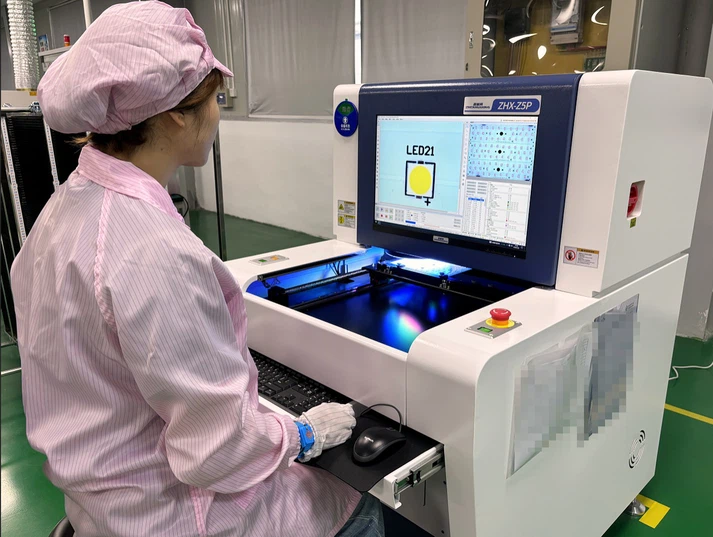
If the AOI detects an anomaly, the board is flagged and routed for immediate rework. No exceptions.
Step 3: Semi-Finished Module Test
After the boards are assembled into semi-finished modules, we perform another round of functional and visual checks. At this stage, we test the LED's overall performance again to confirm brightness, color consistency, and power consumption. Simultaneously, our quality team inspects the module's mechanical appearance, including the integrity of the housing, wiring, and solder joints. This ensures that even before final assembly, the module is electrically and structurally sound.

Step 4: Aging Test (The Ultimate Reliability Check)
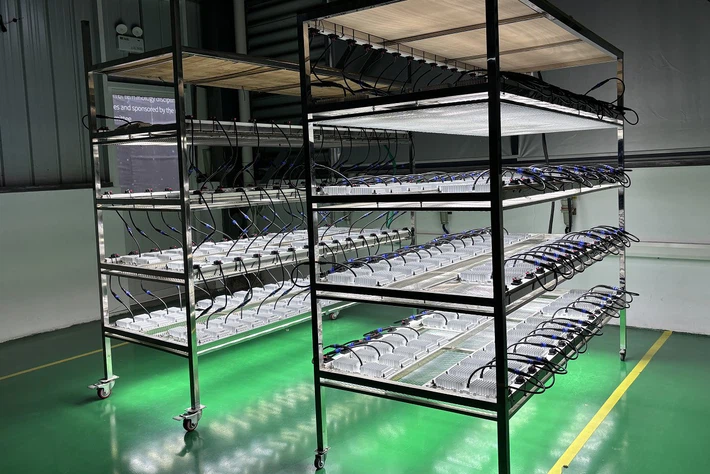
No SMD light leaves our facility without passing a full aging test. Each completed light module is powered on for a specified period under normal or accelerated operating conditions. During this process, we closely monitor for:
· Flickering or unstable output
· Dead/dark LEDs
· Gradual brightness degradation
· Any intermittent electrical behavior
Only modules that pass the aging test without anomalies are approved for packaging and shipment.
Why We Do This for Every Single Batch
We believe that quality cannot be inspected at the end, but it must be verified at every stage. From the first LED light-up to the final aging test, our process is designed to catch defects early, eliminate field failures, and deliver lighting products you can trust.