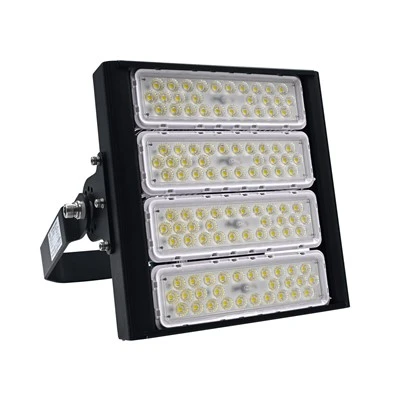

How to Read Explosion-Proof Ratings for LED Work Lights (Ex Code Guide)
Nov 05, 2026
Introduction
In hazardous environments such as oil refineries, chemical plants, mines, and flour mills, flammable gases, vapors, or combustible dusts are constantly present. Standard portable lighting fixtures can easily trigger catastrophic explosions through electrical arcs, sparks, or high surface temperatures.

Explosion-proof LED work lights are specifically engineered to eliminate these ignition risks. However, reading their technical specifications-such as Ex d IIC T6 Gb-can often feel like breaking a secret code.
This comprehensive guide breaks down every component of explosion-proof ratings to help B2B buyers and safety officers choose the right lighting for hazardous locations.
The Core Principle of Explosion-Proof LED Lighting
Contrary to popular belief, "explosion-proof" does not mean the fixture can withstand an external blast. Instead, it means the light fixture is designed to contain any internal ignition or spark within its housing, preventing it from igniting the explosive atmosphere outside.
LED technology is inherently superior for hazardous locations because it operates at significantly lower temperatures, produces zero open flames, and offers exceptional shock resistance.
Breaking Down the Ex Rating Code (Example: Ex d IIC T6 Gb)
An international Ex marking consists of six distinct parameters. Let's decode the widely used industrial rating Ex d IIC T6 Gb:
 Ex    d    IIC    T6    Gb
 ──   ───   ───   ────   ──
 │     │     │      │     └── 6. Equipment Protection Level (EPL)
 │     │     │      └─────── 5. Temperature Class (T-Class)
 │     │     └────────────── 4. Gas / Dust Group
 │     └──────────────────── 3. Protection Type
 └────────────────────────── 1 & 2. Explosion-Proof Marking
Step 1: Ex - Explosion-Proof Standard
Indicates that the equipment complies with international explosion-proof standards, such as ATEX (Europe), IECEx (Global), or NEC/CEC (North America).
Step 2: d - Protection Concept (Structure)
This defines how the fixture prevents ignition:
- d (Flameproof / Explosion-Proof): The internal components are housed in a heavy-duty enclosure. If an internal explosion occurs, the flame path cools and quenches the hot gases before they reach the outside.
- e (Increased Safety): Engineered with enhanced electrical connections to prevent arcs, sparks, or excessive heat.
- ia / ib (Intrinsically Safe): Limits electrical energy so low that even a short circuit cannot produce enough energy to ignite gases.
- m (Encapsulation): Encapsulates spark-producing components in resin.
Step 3: Equipment Group (I, II, III)
- Group I: Underground mining applications (firedamp/methane).
- Group II: Surface industries with explosive gas environments (Standard for most LED work lights).
- Group III: Surface industries with combustible dust environments.
Step 4: Gas Group (IIA, IIB, IIC)
| Gas Group | Representative Gas | Hazard Level | Compatibility |
| IIA | Propane, Gasoline | Low | Fits IIA only |
| IIB | Ethylene, Town Gas | Medium | Fits IIA & IIB |
| IIC | Hydrogen, Acetylene | Highest | Fits IIA, IIB, and IIC |
Buying Tip: Work lights rated IIC provide the broadest safety compliance across almost all gas environments.
Step 5: Temperature Class (T1 to T6)
| T-Class | Max Surface Temp | Typical Ignitable Gases |
| T1 | 450 °C (842 °F) | Hydrogen, Methane |
| T2 | 300 °C (572 °F) | Acetylene, Ethanol |
| T3 | 200 °C (392 °F) | Diesel fuel, Hydrogen sulfide |
| T4 | 135 °C (275 °F) | Ethyl ether |
| T5 | 100 °C (212 °F) | Carbon disulfide |
| T6 | 85 °C (185 °F) | Safest rating (Lowest surface temp) |
Rule of thumb: The higher the T-number (T6 > T1), the cooler the surface and the safer the fixture.
Step 6: Equipment Protection Level (Gb)
- G stands for Gas atmosphere (D for Dust).
- a, b, or c denotes the level of protection. Gb indicates high protection, suitable for Zone 1 and Zone 2 hazardous areas.
Application & Selection Checklist for B2B Buyers
- Offshore Rigs & Chemical Refineries: Opt for Ex d IIC T6 Gb heavy-duty LED floodlights with IP66/IP67 corrosion-resistant aluminum housings.
- Grain Elevators & Woodworking Facilities: Require Group III Dust Certified fixtures (e.g., Ex tb IIIC T80°C Db IP65).
- Confined Space Tank Inspection: Choose Intrinsically Safe (Ex ia/ib) portable LED task lamps powered by low-voltage batteries to protect inspectors against electrocution and sparking.
Summary
When sourcing industrial LED work lights, always request valid ATEX, IECEx, or UL/CSA test reports from your supplier. Matching the exact Ex rating to your site's Zone classification is essential for regulatory compliance and employee safety.