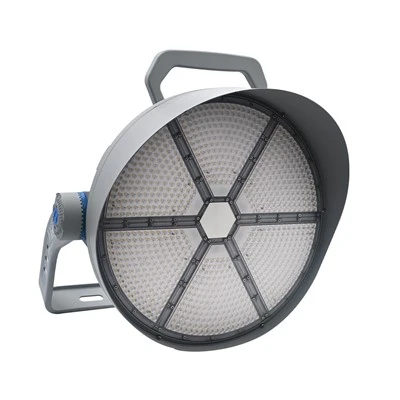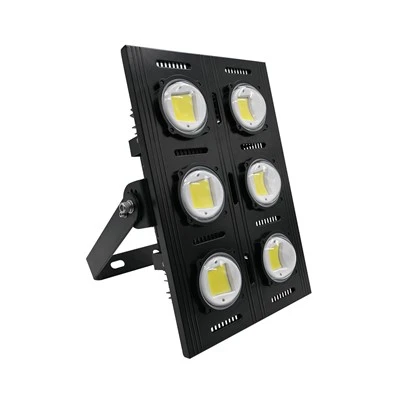

Guide to Mine Site Lighting Design and Explosion-Proof Light Selection (2026)
Aug 07, 2026
Introduction
In the operations of mining enterprises, lighting is a crucial yet often overlooked component. Mining environments are characterized by extreme operating conditions-including flammable and explosive gases, intense vibration, high dust concentrations, highly corrosive gases, and extreme temperature fluctuations. In such settings, lighting transcends the basic function of merely providing illumination; it serves as a lifeline for operational safety and acts as a key factor influencing the enterprise's Total Cost of Ownership (TCO).

Substandard or poorly designed mining lighting not only leads to frequent equipment failure and exorbitant maintenance costs but also significantly increases the risk of major safety accidents and operational blind spots. This article provides an in-depth analysis of the core elements of industrial-grade mining lighting design, selection strategies for various operational zones, and methods to achieve cost reduction and efficiency improvements through scientifically sound design.
Four Core Protection and Performance Indicators for Mining Area Lighting Design
To achieve long-term, stable lighting in extreme environments, the selection and design processes must rigorously control the following four key indicators:
Intrinsic Safety and Explosion-Proof Ratings (Ex Ratings)
In areas containing firedamp, coal dust, or flammable gases (such as methane), it is mandatory to select lighting fixtures that strictly comply with national explosion-proof standards.
- Flameproof (Ex d): The enclosure is designed to withstand the explosion pressure of an internal explosive gas mixture and prevent the propagation of the explosion to the outside.
- Increased Safety (Ex e): The equipment does not produce sparks or arcs under normal operating conditions and incorporates additional measures to enhance safety.
- Selection Principles: The equipment must be strictly matched to the appropriate explosion-proof certification based on the hazardous area classification of the mining site (Zone 1/Zone 2 or Zone 21/Zone 22).
High Ingress Protection and Vibration Resistance
Mining areas are characterized by heavy dust, high humidity, and intense vibrations caused by the operation of heavy machinery.
- Ingress Protection (IP Rating): Luminaires in critical areas must meet IP66/IP67 or even IP68 standards to ensure protection against dust and water.
- Vibration-Resistant Design: Utilize fixtures featuring high-strength aluminum alloy housings and tempered glass lenses, equipped with vibration-dampening rubber gaskets and flexible mounting brackets.
Optical Design and Glare Control (UGR)
In open-pit mines and along haulage roads, high-mounted, high-power floodlights can easily create glare-induced blind spots for haul truck drivers; meanwhile, in the narrow, elongated spaces of underground mines, uneven light distribution can lead to visual fatigue.
- Specialized polarizing or asymmetric light distribution lenses are employed to control the Unified Glare Rating (UGR).
- An appropriate Color Rendering Index (CRI ≥ 70/80) and color temperature (4000K–5000K natural white light) help enhance visibility and object recognition during operations.
Industrial-Grade Thermal Management and Ultra-Long Lifespan
Replacing lights in mining areas entails extremely high costs-particularly for open-pit high-mast lights (tens of meters tall) or units located in hazardous underground zones. Thanks to an advanced honeycomb heat dissipation structure and industrial-grade LED drivers, these fixtures achieve a lifespan of 50,000 to 100,000 hours, significantly reducing long-term inspection and replacement costs.
Zoned Implementation: Lighting Design Schemes for Different Operational Scenarios in Mining Areas
Different mining area scenarios have vastly different requirements regarding lighting, explosion protection, and structural design, necessitating a "zone-specific" approach:
|
Work Area |
Key Pain Points and Needs |
Recommended Design and Lighting Selection |
|
Underground Mining Face and Roadway |
Narrow and long space, flammable gas, high humidity, and prone to collision |
Explosion-proof LED strip lights Forming a continuous, shadowless light band Emergency power supply (with built-in batteries) is required. |
|
Open-pit Mines and Transport Roads |
Long range, large blind spot, high-altitude wind resistance, and glare for truck drivers |
High mast systems High-power polarized LED floodlights (400W-1000W) Strictly control the projection angle to eliminate blind spots for drivers. |
|
Ore Dressing Plant and Crushing Workshop |
Severe vibration, extremely high dust levels, and highly corrosive environments |
Shock-resistant explosion-proof pendant lights Spring-loaded shock absorber bracket The outer casing has an anti-corrosion coating, and the lens is easy to clean. |
|
Storage Yard and Ground Office and Living Area |
Large coverage area, focusing on energy efficiency and comfort |
Industrial LED floodlights Combined with light-sensing dimming, it can alleviate visual fatigue after work. |
Compliance and Precision Design: Illuminance Standards and DIALux Simulation
Scientific lighting design for mining areas is by no means a matter of "hanging lights based on intuition"; rather, it involves a precise engineering calculation process.
Define Illuminance Standards (Lux)
Designs must strictly adhere to national standards (such as *GB 50034: Standard for Lighting Design of Buildings* and Safety Regulations for Coal Mines):
- Main haulage roadways/crushing workshops: Recommended average illuminance of 50–100 Lux.
- Open-pit mining areas/roads: Recommended average illuminance of 15–30 Lux; increase to 50 Lux at key intersections.
- Mineral processing control rooms/precision operation areas: Must achieve 200–300 Lux.
3D Illuminance Modeling Based on DIALux
Before procurement and construction, DIALux optical simulation software is used to build a 3D model of the mining site. By simulating luminaire placement, beam angles, and shadow patterns, it is possible to precisely determine:
- Whether illuminance uniformity meets the required standards.
- The optimal number of luminaires and their installation angles-thereby avoiding wasteful over-installation or safety hazards caused by under-installation .
Frequently Asked Questions (FAQ)
Q1: How should one select suitable explosion-proof lighting for high-vibration environments, such as crushing workshops?
A: Avoid standard fixtures with rigid mounts. Instead, select industrial-grade fixtures that have passed national vibration testing. Key features to look for include mounting brackets equipped with vibration-dampening rubber pads or dual locking bolts, and internal drivers that have undergone potting (resin encapsulation) to prevent wiring terminals from loosening or electronic components from detaching due to vibration.
Q2: What are the benefits of upgrading from traditional high-pressure sodium or metal-halide lamps to LED lighting for mining applications?
A: The overall benefits are substantial. LED fixtures typically offer direct electricity cost savings of 50% to 70%. Additionally, because LEDs have a lifespan more than five times that of traditional light sources, maintenance labor costs for high-altitude or underground locations can be reduced by 80%, allowing the initial investment to be recouped within 12 to 18 months.
Q3: How should mobile lighting towers and fixed high-mast lights be combined in an open-pit mining area?
A: Fixed high-mast lights are suitable for relatively stable main haulage roads and permanent stockpiles. For mining faces that shift as extraction progresses, however, it is recommended to use diesel or solar-powered mobile explosion-proof lighting towers; these can be flexibly relocated alongside the work area, ensuring that "where the vehicles go, the light follows."
Conclusion
Lighting design for mining areas is a systems engineering endeavor that integrates optics, explosion-proof safety, structural mechanics, and intelligent control. Selecting the right lighting solution not only illuminates a safe path for frontline miners but also represents a crucial step for enterprises in reducing costs, enhancing efficiency, and building green, smart mines.