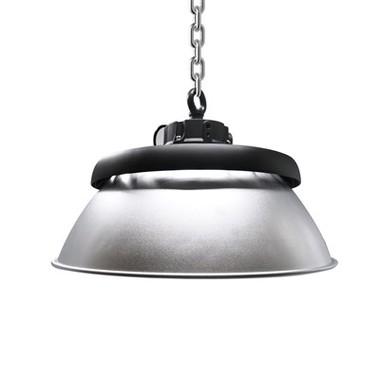

Analysis of the Key Differences between High-Mast Lights and Standard Streetlights
Sep 17, 2026
Introduction
High mast lighting and standard street lighting are both forms of outdoor lighting, yet they differ fundamentally in terms of structural design, optical characteristics, application scenarios, and maintenance methods. The following is a systematic analysis of the key differences between the two from a professional perspective.

Comparison of Key Technical Parameters
|
Comparison Criteria |
High-Mast Lights |
Standard Streetlights |
|
Typical Height |
15m – 40m+ |
6 meters – 12 meters |
|
Light Distribution |
Surface coverage, large-area uniform illumination |
Linear extension, focusing on the road itself |
|
Light Source Type |
High-power LED floodlight/spotlight combination |
Road-specific directional light head |
|
Structural Design |
Polygonal steel pylon, with high wind load resistance requirements, equipped with a lifting system. |
Single-arm/double-arm fixed pole, with a relatively simple basic structure. |
|
Maintenance Method |
Built-in electric lifting system allows the light panel to be lowered to the ground for maintenance. |
Relying on aerial work platforms for on-site maintenance |
|
Typical Applications |
Plazas, airports, ports, interchanges |
Urban main and secondary roads, residential areas, and industrial parks |
Analysis of Differences in the Four Core Technologies
Structural and Load Design
Standard Streetlights: Typically 6–12 meters in height, these usually feature a single- or double-arm fixed structure. The structural load requirements for the pole are low, resulting in relatively economical construction and installation costs.
High-Mast Lights: These reach heights of 15–40 meters or more. The poles are generally constructed from high-strength steel plates bent into polygonal shapes (such as octagonal or dodecagonal sections) and assembled via slip-joint connections. A heavy-duty lighting assembly is mounted at the top, necessitating rigorous calculations for wind resistance, seismic performance, and dead-load capacity.
Light Distribution Design and Lighting Efficiency
Standard Streetlights: Utilize directional light distribution specifically designed for roadways (such as a "batwing" beam pattern) to confine the light beam to a narrow, elongated area extending along the road. This precisely illuminates traffic lanes and sidewalks, thereby enhancing light utilization efficiency and minimizing light pollution.
High-Mast Lights: Leverage the advantage of high-altitude mounting by employing high-power LED projectors or floodlight arrays. Through the overlapping of beams from multiple angles, they achieve broad, area-wide coverage. They offer high illumination uniformity, effectively eliminating shadowed "dead zones," with a single unit capable of covering an area of over ten thousand square meters.
Application Scenarios and System Efficiency
Standard Streetlights: Designed for road networks; suitable for urban arterial and secondary roads, rural highways, and access roads within residential communities and industrial parks.
High-Mast Lights: Designed for large, open areas such as airport aprons, port terminals, highway interchanges, and expansive plazas. In open spaces, a single high-mast light can replace dozens of standard streetlights, significantly reducing the number of ground-level poles and improving spatial utilization.
Operations, Maintenance, and Safety
Standard streetlights: These lack mechanical drive components; on-site maintenance requires the deployment of aerial work platforms and is significantly constrained by road traffic and access conditions.
High-mast lights: These are equipped with a top-mounted winch, a steel cable drive system, and a locking mechanism. Maintenance involves simply lowering the light assembly slowly to the ground via an electric lifting system, allowing personnel to work at ground level; this significantly reduces the risks associated with working at heights and lowers overall maintenance costs.
Selection Decision Guide
High-Mast Lighting: Suitable for large, open areas (rather than narrow, linear roads); areas requiring high illuminance and high uniformity of coverage; and locations where ground-level clearance is critical, necessitating a significant reduction in the number of poles.
Standard Street Lighting: Suitable for road networks serving vehicles and pedestrians; projects sensitive to initial installation budgets; and areas requiring only directional illumination of specific traffic lanes and sidewalks.
Product Recommendations
To withstand rigorous industrial operating conditions-such as extreme equipment vibration, high heat, or moisture ingress-high-standard lighting solutions require exceptionally robust hardware.

The JR309 series LED floodlights are engineered specifically for these demanding commercial and industrial environments. The series offers a wide power range from 50W to 600W and features high-efficacy SMD floodlight arrays, delivering a system luminous efficacy of up to 200 lm/W. Designed with customizable optical lenses (25°, 40°, 60°, and 90°) and incorporating a vibration-resistant arch-bridge structure alongside a dual-coupled IP67-rated housing, the JR309 ensures professional, reliable, and trouble-free lighting for ports, factories, and stadiums. This rugged design fundamentally resolves the industry's pain points associated with traditional, energy-intensive fixtures-namely frequent failures and high maintenance costs in harsh outdoor settings.
Frequently Asked Questions (FAQ)
Q1: What is the difference in height between high-mast lights and standard streetlights?
A: Standard streetlights typically range from 6 to 12 meters in height and are primarily used for roadways; high-mast lights exceed 15 meters-commonly ranging from 18 to 35 meters-and are used for large-area illumination.
Q2: How do their primary application scenarios and lighting effects differ?
A: Standard streetlights are used for urban roads and lanes, providing linear illumination; high-mast lights are used in open areas such as plazas, airports, ports, and highway interchanges, providing wide-area floodlighting.
Q3: Given their great height, how are high-mast lights maintained when repairs are needed?
A: Standard streetlights require an aerial work platform (bucket truck) for maintenance, whereas high-mast lights feature an internal electric lifting system that allows the top light assembly to be lowered to the ground for servicing.
Q4: How do they differ in terms of light source power and the number of fixtures?
A: Standard streetlights usually feature one or two heads, with power ratings between 30W and 300W per light; high-mast lights consist of multiple floodlights arranged on a mounting assembly, with a total power output often ranging from 1,000W to over 6,000W.
Conclusion
High-mast lights and standard streetlights differ by more than just height; they represent distinct professional lighting solutions-varying in optical design, structural engineering, and maintenance protocols-tailored to specific operational environments. High-mast lighting focuses on providing efficient coverage for expansive open areas and enabling safe, ground-level maintenance, whereas standard streetlights are designed for precise guidance and basic illumination along linear road networks. Project selection should comprehensively weigh factors such as site area, illuminance uniformity requirements, and long-term maintenance costs to achieve an optimal balance between lighting quality and economic efficiency.