
Top View of Stadium Lights: Layouts, Beam Angles, and Installation Tips
Jun 20, 2025
Ever watched a night game from above or caught a drone shot of a stadium and wondered-how the heck are those stadium lights so perfectly arranged? Well, there's a whole science behind it, and the view from the top tells a story of precision, power, and planning.

In this post, we're taking a full top-down look atstadium lighting - from layout strategies to beam angles, pole placements, and even energy efficiency. Whether you're designing a new sports facility or just lighting up your backyard field, this one's for you.
Why Top View Planning of Stadium Lights Matters
The top view gives lighting designers and engineers a bird's-eye perspective on how light will hit the playing field. It's essential for:
- Ensuring uniform light distribution
- Minimizing glare and shadows
- Aligning with international sports lighting standards
- Optimizing power usage and cost-efficiency
Without a solid top-view plan, you risk dark corners, blinding hotspots, and a bad experience for both players and spectators.
Common Stadium Light Layout Patterns (Top View)
There's no one-size-fits-all, but here are the most common layout patterns seen from above:
| Layout Type | Number of Poles | Common Use Case | Pros | Cons |
| Rectangle Layout | 4–6 | Soccer, Rugby, Cricket | Uniform coverage | May need high mast poles |
| Diamond Layout | 4–8 | Football, Baseball | Minimizes glare to players | Complex aiming |
| Circular / Ring Layout | 8–12 | Large stadiums, Concerts | Balanced coverage from all sides | High initial cost |
| Opposite Layout | 2–4 | Smaller fields, tennis courts | Fewer poles, cost-saving | Less even lighting |
Beam Angle Considerations (From Top View)
Beam angle plays a massive role in how well the lights cover the field. Too narrow, and you'll get hotspots. Too wide, and you waste light off the field.
| Beam Angle | Best For | Lighting Effect |
| 15°–30° | High mast, long throw | Focused and intense light |
| 30°–60° | Mid-range applications | Balanced distribution |
| 60°–120° | Lower poles, wide coverage | Broad, softer light, less glare |
Tip: Mix beam angles in your layout for layered coverage-tight beams for center, wider for the sides.
Light Pole Placement: Where Do They Go?
From a top view, pole placement is like setting the corners on a puzzle. The key is to ensure every area gets overlapping light-but not overkill.
Recommended Pole Placements by Field Size
| Field Type | Number of Poles | Distance from Field (m) | Height (m) |
| Football (Soccer) | 4–6 | 15–25 | 25–40 |
| Baseball | 6–8 | 18–28 | 30–45 |
| Multi-sport Arena | 8–12 | 20–30 | 35–50 |
Golden Rule: Avoid placing poles directly behind goalposts or batter boxes-blinding players is a big no-no
Stadium Light Types Often Used
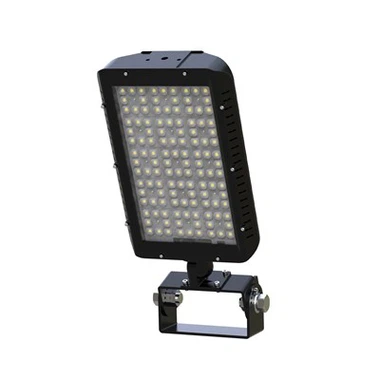
When viewed from the top, you'll often see a mix of LED floodlights and high-intensity discharge (HID) fixtures-though LEDs are quickly taking over.
| Light Type | Lumen Output | Energy Efficiency | Life Span (hrs) | Common Use |
| LED Floodlights | 50,000–200,000 | ⭐⭐⭐⭐⭐ (Very High) | 50,000+ | Modern stadiums |
| Metal Halide | 70,000–150,000 | ⭐⭐ (Medium) | 15,000–25,000 | Older stadiums |
| Halogen | 20,000–90,000 | ⭐ (Low) | 2,000–5,000 | Temporary setups |
LEDs also offer better control over beam angles and instant ON/OFF-making them perfect for shows and games.
Light Coverage: Avoiding Dead Zones
Here's where the top-view layout shines. By overlapping light beams just enough (about 10-20%), you can avoid:
- Dark corners on the pitch
- Shadow lines between lights
- Over-bright hot spots
Sample Light Coverage Diagram (Text-based)

Each pole lights up its quadrant, and the beam angles cross at the center for maximum brightness.

Pro Tips for Stadium Light Installation
Use 3D lighting software (like DIALux or AGi32) to simulate top views before real-world setup.
Always consider wind load on tall poles-use guy wires or deeper foundations if needed.
Add light sensors or smart controls to auto-adjust brightness during different times of day.
FAQs About Top View of Stadium Lighting
Q: What's the best layout for a small soccer field?
A: A 4-pole rectangular layout with 25–35° beam angles works great for balanced coverage.
Q: Can LED lights replace metal halides in existing layouts?
A: Absolutely-but make sure to re-calculate beam angles and lumens since LEDs are more focused.
Q: How far apart should stadium lights be placed?
A: Depends on the field size, but spacing should allow 10–20% beam overlap from a top view.
Q: What height should stadium light poles be?
A: Usually between 25–50 meters, depending on the sport and venue size.

Before You Go…
Top-view stadium lighting isn't just about sticking some poles around a field-it's an art and a science. The layout you choose directly affects how players perform and how the audience experiences the game. Get it right, and it's like turning on daylight after dark. Get it wrong, and you're looking at shadowy messes and wasted energy.
Want to dive deeper? Here are some solid external resources:
Illuminating Engineering Society – Sports Lighting Guide
FIFA Stadium Lighting Standards (PDF)
If you're setting up stadium lighting or planning a renovation, always start with a top-down plan-it'll save you money, time, and headaches down the line.
Got more questions or want a custom layout? Drop them below or let's chat!