
What Is a High Mast Lighting System?
Mar 05, 2026
Excerpt / Introduction:
People sometimes think it is just "a tall pole with flood lights". Actually, it's more complicated than that. In real engineering projects, high mast lighting involves structure design, wind load calculation, illumination planning, and maintenance systems.
I have worked with several yard lighting projects in the past years. One thing I noticed - many clients ask the same question: what exactly is high mast lighting and why not just use normal flood lights?
So in this article I will explain it in a simple way, based on practical project experience. Some parts maybe not perfect grammar, but the idea should be clear.

What is a High Mast Lighting System?
A high mast lighting system is a lighting structure where multiple powerful luminaires are mounted on a very tall steel pole, usually between 20 meters and 40 meters high.
Instead of placing many small lighting poles around an area, engineers install a few very tall masts to illuminate the whole space.
Typical places using high mast lighting include:
- container ports
- highway interchanges
- airport aprons
- logistics yards
- stadium parking areas
- industrial facilities
- The idea is simple: high position, wide light coverage.
But when you start design it, there are many things to calculate.
Main Parts of a High Mast Lighting System
A high mast lighting system is not only the pole. There are several components working together.
|
Component |
Description |
|
Mast pole |
Tall tapered steel pole supporting the lighting system |
|
Luminaire ring |
Circular frame holding multiple flood lights |
|
Flood lights |
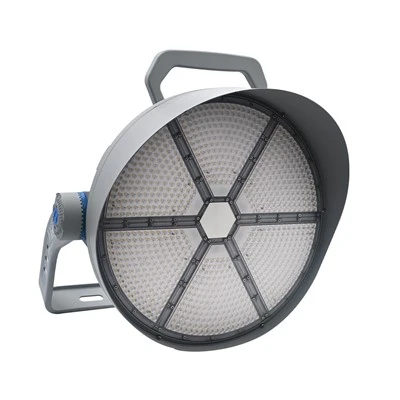
High output LED fixtures providing illumination |
|
Winch system |
Mechanical device to raise or lower the lighting ring |
|
Steel wire ropes |
Support and safety cables |
|
Foundation |
Reinforced concrete base in the ground |
One interesting part is the lowering system.
Most high mast lighting towers allow the whole lighting ring to be lowered down to ground level for maintenance. This makes repair easier, because climbing 30 meters with tools is not very practical… and also dangerous.
Typical Height of High Mast Lighting
Different projects use different mast heights. It depends on the area size and lighting requirement.
Below is a simple reference engineers often use in early planning.
|
Application |
Typical Height |
|
Parking areas |
20–25 m |
|
Highway interchanges |
25–30 m |
|
Industrial yards |
25–35 m |
|
Container terminals |
30–40 m |
|
Airport apron lighting |
30–45 m |
The higher the mast, the bigger the coverage area. But there is also a problem - light intensity decreases when distance increases.
This happens because of the inverse square law.
To say in simple words: if you double the distance between light and ground, brightness becomes about one quarter. So taller poles usually require stronger lights.
How Many Lumens in High Mast Lighting?
High mast lighting systems usually use very high lumen flood lights.
A normal street light maybe produce 5,000–10,000 lumens.
But high mast fixtures are much stronger.
Here is a typical configuration engineers use.
|
Number of Fixtures |
Lumens per Fixture |
Total Lumens per Mast |
|
6 lights |
40,000 lm |
240,000 lm |
|
8 lights |
50,000 lm |
400,000 lm |
|
12 lights |
60,000 lm |
720,000 lm |
|
16 lights |
70,000 lm |
1,120,000 lm |
So one high mast lighting tower can easily produce more than one million lumens.
Of course, we do not start design from lumen numbers. Normally engineers start from lux requirement on the ground.
Real Project Example: Industrial Container Yard
Let me share a small example from a yard lighting project.
Project information:
- Area: 38,000 m²
- Target illumination: 30 lux
- Mast height: 30 meters
- First step is estimating total lumen requirement.
Formula (rough estimation):
- Total Lumens = Area × Lux ÷ Utilization Factor
- Assume utilization factor = 0.6
- 38,000 × 30 ÷ 0.6 ≈ 1,900,000 lumens
Then we selected:
- 5 high mast poles
- Each pole with 8 LED flood lights
- Each fixture 50,000 lumens
Total output per mast:
- 8 × 50,000 = 400,000 lumens
- Total system output:
- 5 × 400,000 = 2,000,000 lumens
After installation, field measurement showed average 32 lux. That is acceptable according to project requirement.
Not perfect uniformity maybe, but still good enough for container handling operations.

Why Engineers Use High Mast Lighting
There are several reasons why high mast lighting systems are widely used in large outdoor areas.
1. Large Area Coverage
One tall mast can cover a big area. Sometimes a single tower replaces 6–10 standard lighting poles.
This simplifies installation and underground cabling.
2. Fewer Obstacles on the Ground
In container yards or logistics centers, too many poles can block truck movement.
High mast lighting keeps ground space more open.
3. Easier Maintenance
Because of the lowering system, technicians can bring the lighting ring down to ground level.
No crane needed. Maintenance becomes much easier.
4. Better Light Distribution
Light coming from higher position spreads more evenly.
This reduces strong shadows created by trucks, containers, or equipment.
Some Engineering Challenges
- Although high mast lighting is useful, it also comes with some challenges.
- Wind Load
- A 30–40 meter steel pole experiences strong wind force. Structural design must follow standards like:
- EN40
- AASHTO
- local wind load regulations
- Otherwise pole vibration can occur.
- Foundation Design
- High mast poles need very strong foundations.
Typical foundation sizes may look like this:
|
Mast Height |
Foundation Size |
|
20 m |
1.5 m × 1.5 m × 2 m |
|
30 m |
2 m × 2 m × 2.5 m |
|
40 m |
2.5 m × 2.5 m × 3 m |
But soil condition also matters. Soft soil may require larger foundations.
Glare Issues
Because fixtures are powerful, bad aiming angles can cause glare.
Drivers or machine operators may feel uncomfortable if light points directly toward their line of sight.
So during installation, proper tilt angle and beam selection are important.
LED vs Traditional High Mast Lighting
In the past, most high mast systems used metal halide lamps. Now many projects switch to LED.
Here is a simple comparison.
|
Lighting Type |
Efficiency |
Lifespan |
|
80–100 lm/W |
10,000–15,000 hours |
|
|
140–180 lm/W |
50,000+ hours |
LED systems also start instantly and require less maintenance.
Many retrofit projects report 40–60% energy savings after switching to LED high mast lighting.
When Should You Use High Mast Lighting?
High mast lighting is usually suitable when:
- Lighting area larger than 10,000 m²
- Mounting height above 20 meters
- Wide and open outdoor space
- Need for uniform illumination
For small areas like small parking lots or building entrances, normal flood lighting poles are usually more economical.

Final Thoughts
So, what is a high mast lighting system?
In simple terms, it is a lighting solution using very tall poles with multiple high-power flood lights, designed to illuminate large outdoor spaces efficiently.
But from an engineering perspective, it involves much more than just installing a tall pole. Proper design requires calculations for lux levels, lumen output, wind load, foundation strength, and lighting distribution.
When done properly, a high mast lighting system can operate reliably for 20 years or more, providing consistent illumination for ports, highways, and industrial facilities.
And honestly speaking - once you see a well-designed high mast lighting installation at night, lighting an entire yard from just a few towers… it's quite impressive.